Table of Contents
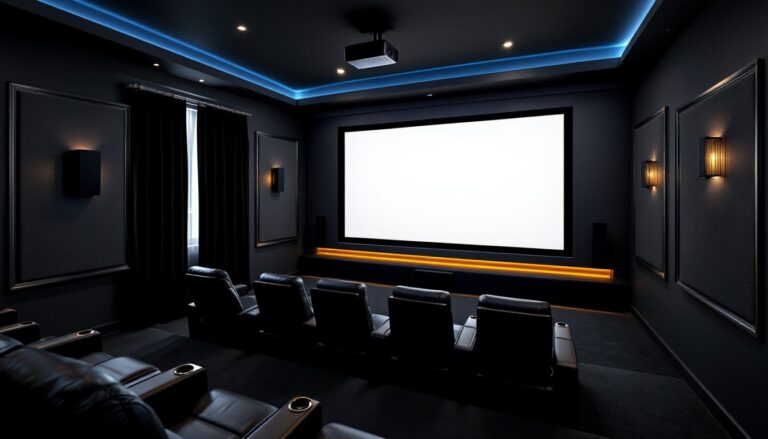
ToggleUtah homeowners are turning basements and bonus rooms into dedicated entertainment spaces faster than ever. With the state’s family-focused culture and increasing home values, a well-executed home theater delivers both lifestyle benefits and solid ROI. This guide walks through the practical considerations, space selection, equipment choices, acoustic treatment, and installation decisions, specific to building a home theater in Utah’s unique climate and housing stock.
Key Takeaways
- A well-designed home theater in Utah can recoup 65–80% of mid-range costs ($15,000–$40,000) in higher-end neighborhoods, making it both a lifestyle upgrade and solid financial investment.
- Utah’s basements and bonus rooms are ideal for home theater Utah projects due to natural sound isolation, easy darkening, and minimal moisture concerns thanks to the state’s dry climate.
- Proper acoustic treatment requires two separate approaches: soundproofing walls using staggered studs and mass damping to block noise transfer, and absorption panels to improve internal sound quality.
- Start with quality audio and video equipment ($5,000 entry-level setups) before investing in premium seating and custom acoustic treatments, as this 80/20 approach delivers most of the viewing experience at lower cost.
- Utah homeowners should hire licensed electricians for circuit upgrades (non-negotiable permits required) and structural work, but can DIY speaker wiring, acoustic panel installation, and seating arrangement.
- Utah’s lower labor rates (10–15% below major metros) and family-sized households make dedicated entertainment spaces more practical and affordable than cramped living room alternatives.
Why Utah Homeowners Are Investing in Home Theaters
Utah’s housing market and lifestyle trends make home theaters particularly attractive. The state’s climate, hot, dry summers and cold winters, encourages year-round indoor entertainment spaces. Unlike coastal markets, Utah homes often feature unfinished basements or flex spaces perfect for conversion.
Return on investment matters. Mid-range home theaters (roughly $15,000–$40,000) can recoup 65–80% of costs in higher-end neighborhoods, particularly in areas like Draper, Park City, and Alpine. That percentage drops in lower price brackets, so align the project scope with neighborhood comps.
Family size plays a role. Utah has the largest average household size in the U.S., making dedicated entertainment spaces more functional than cramped living room setups. A properly designed theater handles movie nights, gaming sessions, and sports viewing without disrupting other household activities.
Energy efficiency considerations are real. Utah’s arid climate means HVAC systems work hard. Adding a sealed, insulated theater room with its own zone control can actually improve overall home efficiency when designed correctly.
Planning Your Home Theater: Space, Budget, and Design Considerations
Start with realistic numbers. Entry-level DIY setups begin around $3,000–$5,000 (projector, screen, basic sound, seating). Mid-range builds run $15,000–$40,000. High-end installations with custom acoustics, tiered seating, and premium AV gear easily exceed $75,000. Material costs in Utah track national averages, but labor rates in Salt Lake County run 10–15% below major metro areas like Los Angeles or New York.
Room dimensions matter more than square footage. The ideal ratio is roughly 1.6:1 (width to length), with ceiling heights between 8–10 feet. Basements in Utah homes built after 2000 typically offer 9-foot ceilings, adequate but not generous. Avoid square rooms: they create standing wave issues that muddy bass response.
Electrical planning is non-negotiable. Budget for at least two dedicated 20-amp circuits: one for AV equipment, one for lighting and accessories. Utah follows the National Electrical Code (NEC), and permits are required for new circuits. Hire a licensed electrician if you’re adding circuits, this isn’t a DIY-friendly task unless you’re already comfortable with service panel work.
Choosing the Right Space in Your Utah Home
Basements are the default choice for good reason. They’re naturally insulated from exterior noise, easier to darken completely, and often underutilized. Utah’s dry climate minimizes moisture concerns compared to humid regions, but still install a 6-mil polyethylene vapor barrier over concrete floors before laying any flooring.
Main-floor bonus rooms work if the home theater won’t disturb bedrooms. Soundproofing becomes critical here, expect to add staggered-stud walls with Roxul Safe’n’Sound insulation and double layers of 5/8-inch drywall on resilient channels. That’s a $2,500–$5,000 expense before paint.
Garages are tempting but problematic. Utah’s temperature swings (often 30–40°F between day and night in spring and fall) make climate control expensive. If converting a garage, budget for serious insulation upgrades: R-30 in walls, R-49 in ceilings, plus a mini-split HVAC system.
Essential Home Theater Equipment and Technology
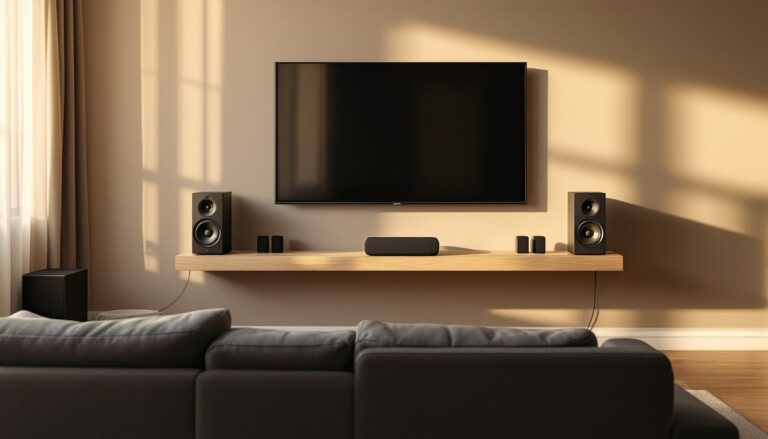
Projectors vs. Large TVs: For rooms with throw distances over 10 feet, projectors make sense. A quality 4K HDR projector (brands like Epson, BenQ, or Sony) runs $1,200–$3,500. Pair it with a 120-inch fixed-frame screen ($300–$800). For smaller spaces or bright rooms, an 85-inch OLED or QLED TV delivers better picture quality in ambient light. Current models from companies covered by home technology reviews offer excellent HDR performance.
Audio systems: Skip soundbars for dedicated theaters. Start with a 5.1.2 Dolby Atmos receiver (Denon, Yamaha, Marantz) at $500–$1,000. Budget speakers break down as:
- Front L/C/R speakers: $600–$1,500 (bookshelf or tower)
- Surrounds: $300–$600
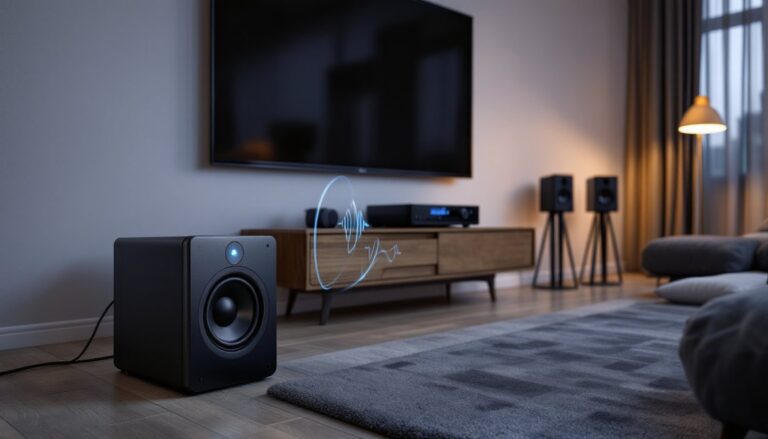
- Subwoofer: $400–$1,200 (single 12-inch minimum)
- Atmos height modules or in-ceiling speakers: $200–$500
Wire everything with 12-gauge or 14-gauge oxygen-free copper speaker wire. Run conduit during framing to future-proof upgrades.
Seating: Theater seats with cup holders and recline functions cost $400–$1,500 per seat. For tighter budgets, a quality sectional sofa works fine. Arrange seating so the first row sits 1.5x the screen width away, for a 120-inch screen (roughly 10 feet wide), that’s 15 feet minimum.
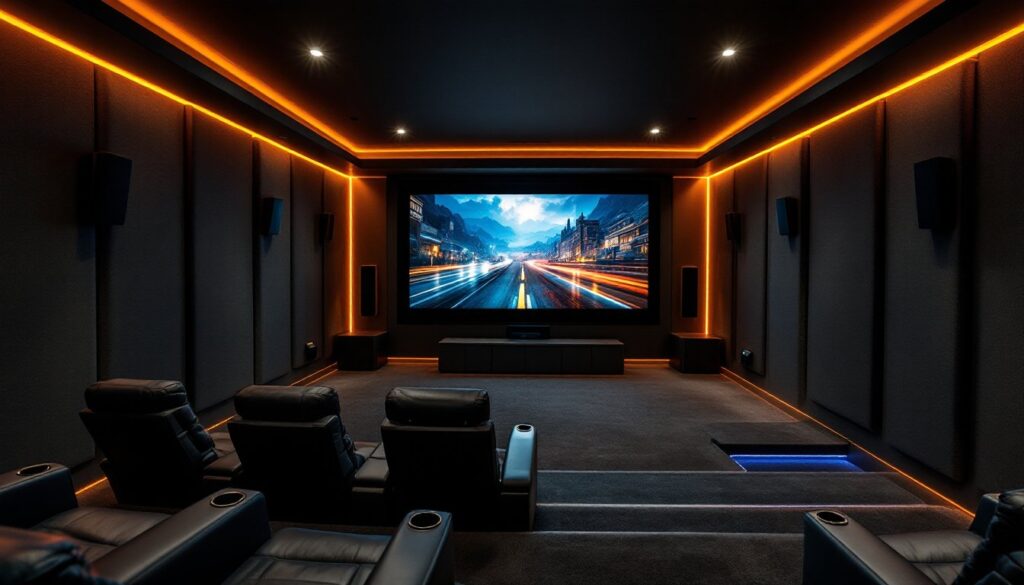
Lighting control: Install dimmable LED recessed lights (3000K color temp) on a smart dimmer switch. Avoid overhead lights directly above the screen. Rope lighting along step edges or baseboards adds safety without screen glare.
Acoustic Treatment and Soundproofing for Utah Homes
Soundproofing stops noise transfer: acoustic treatment improves sound quality inside the room. They’re different problems requiring different solutions.
Soundproofing basics: Mass and decoupling work best. Standard basement walls in Utah homes use 2×4 studs with R-13 fiberglass, not enough. Upgrade to:
- Staggered-stud or double-wall construction to decouple surfaces
- Roxul Safe’n’Sound or Owens Corning 703 between studs
- Two layers of 5/8-inch Type X drywall with Green Glue damping compound between layers
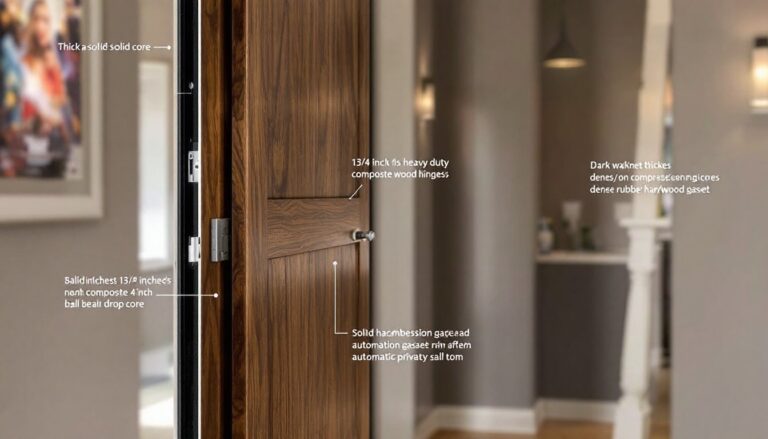
- Solid-core doors with weatherstripping and automatic door sweeps
That wall assembly achieves STC ratings of 55–60, adequate for most residential applications. Check local building codes, some Utah municipalities require permits for structural wall changes.
Acoustic treatment: Hard drywall and concrete reflect sound, creating echoes and nulls. Add absorption at first reflection points (side walls, ceiling above seating) using 2-inch acoustic panels (DIY-friendly: build frames, wrap with Roxul, cover with acoustically transparent fabric). Budget $300–$800 for materials.
Bass traps in corners tame low-frequency buildup. Four corner-mounted 4-inch-thick absorbers make a noticeable difference. Many smart home guides now cover integrated acoustic solutions that work with modern AV systems.
Carpet or thick area rugs over padding help, especially on concrete basement floors. Aim for 50–70% surface coverage to avoid overdamping the room.
DIY vs. Professional Installation: What Utah Homeowners Need to Know
DIY-friendly tasks:
- Running speaker wire and HDMI cables (use in-wall rated CL3 cable)
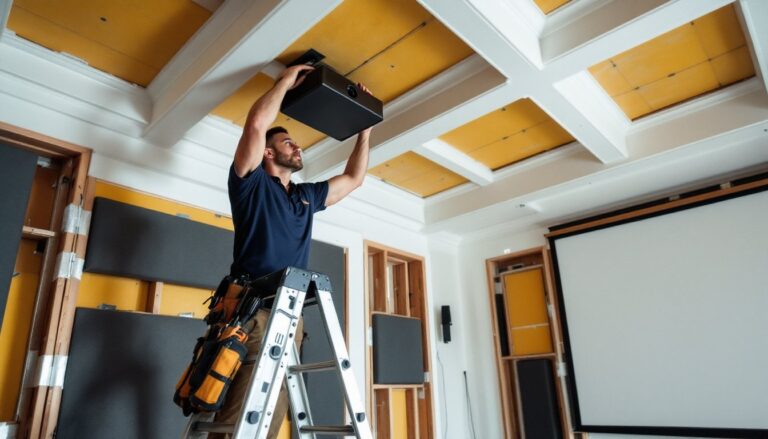
- Mounting projectors and screens
- Installing acoustic panels
- Painting (use flat black or dark gray on walls: matte black on ceilings)
- Basic seating arrangement
When to hire pros:
- Electrical work requiring permits (new circuits, recessed lighting)
- HVAC modifications or zoning
- Structural changes (removing or adding walls, raising ceilings)
- Custom AV rack builds and system programming
- Soundproofing if you’re unfamiliar with decoupling techniques
Utah has several experienced AV integrators, particularly along the Wasatch Front. Expect labor rates of $75–$125/hour for skilled technicians. Get three quotes and ask for references, check completed projects if possible.
Safety gear for DIYers: Wear safety glasses when cutting lumber or drywall. Use hearing protection with circular saws and routers. A dust mask (N95 minimum) is essential when cutting insulation or MDF. When working with fiberglass or mineral wool, long sleeves and gloves prevent skin irritation.
Financing Your Home Theater Project
Most homeowners fund theater builds through:
- Cash savings (avoids interest, simplest option)
- Home equity lines of credit (HELOCs) (rates currently 7.5–9.5% in Utah)
- Cash-out refinancing (only makes sense if current mortgage rates beat your existing rate)
- Personal loans (expect 8–12% APR with good credit)
Utah’s property tax rates are relatively low (average 0.52%), so increased home value from a theater addition won’t dramatically impact annual taxes. That said, consult current home improvement financing trends to understand how upgrades affect resale.
Phase the project if budget is tight. Start with quality audio and video: add acoustic treatments and custom seating later. A $5,000 initial investment delivers 80% of the experience: the remaining 20% costs exponentially more.