Table of Contents
ToggleA home theater without a rug is like surround sound in a gymnasium, technically functional but missing the warmth and sonic control that make the experience immersive. The right rug doesn’t just tie the room together visually: it absorbs echo, reduces footfall noise, and keeps feet comfortable during marathon movie sessions. With more homeowners building dedicated media rooms in 2026, choosing a rug that balances acoustics, durability, and design has become essential. This guide walks through material choices, sizing strategies, and maintenance tips to help DIYers select a rug that performs as well as it looks.
Key Takeaways
- Home theater rugs absorb sound reflections and reduce echo, improving dialogue clarity and overall audio quality in dedicated media rooms.
- Wool and high-pile synthetic fibers are the best materials for sound absorption, with wool offering superior durability and natural flame resistance at $15–$40 per square foot.
- An 8′ x 10′ or 9′ x 12′ rug extending 18–24 inches beyond seating provides optimal acoustic performance and visual balance in most home theater setups.
- Dark, saturated colors like charcoal, navy, and burgundy minimize light reflection and keep focus on the screen during viewing.
- Weekly vacuuming, immediate spot-cleaning of spills, and professional deep-cleaning every 12–18 months maintain rug performance and appearance in high-traffic home theaters.
- A quality rug pad with thick felt or rubber backing prevents slipping, adds cushioning, and improves sound absorption by creating an air gap between the rug and floor.
Why Your Home Theater Needs the Right Rug
Installing a rug in a home theater solves two common problems: poor acoustics and a cold, uninviting floor. Hard surfaces like tile, hardwood, or concrete reflect sound waves, creating echo and muddying dialogue clarity. A well-chosen rug acts as a passive sound absorber, improving the overall audio experience without expensive acoustic panels.
Acoustic Benefits of Rugs in Home Theaters
Sound bounces. In a room with multiple hard surfaces, drywall, windows, flooring, audio reflections stack up and create reverb. This is especially problematic for dialogue-heavy content or calibrated surround sound systems. A thick rug with a dense pile absorbs mid- and high-frequency sound waves before they bounce back, reducing slap echo and tightening bass response.
Wool and high-pile synthetic fibers perform best for sound absorption. The denser the material, the more effective it is at trapping sound energy. Pair the rug with a thick rubber or felt underlayment (not just thin non-slip mesh) to increase absorption, especially in the 500–2000 Hz range where dialogue lives.
Placement matters. Position the rug in the primary reflection zone, the floor area between the front speakers and the seating. This is where early reflections are strongest and most audible. If the room is large, consider a second rug under or behind the seating to manage rear-channel reflections.
Comfort and Aesthetic Appeal
Comfort is straightforward: a rug cushions feet, reduces fatigue during long viewing sessions, and adds a layer of insulation against cold subfloors. For basement home theaters built over concrete slabs, this can make a noticeable difference in perceived room temperature.
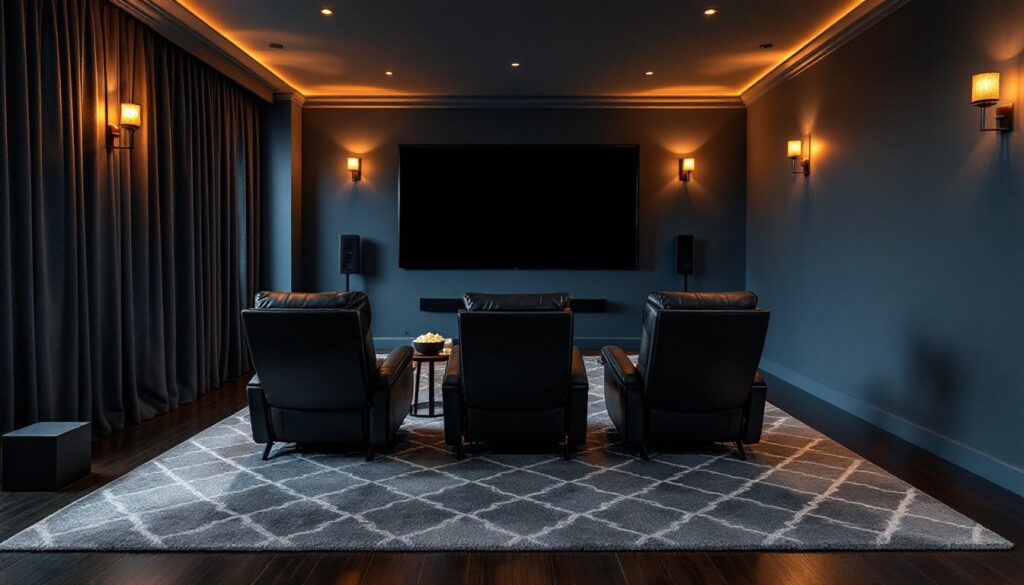
Visually, a rug anchors the seating area and defines the theater zone, especially in multipurpose rooms. Dark colors and low-contrast patterns minimize light reflection during viewing, which is critical if the room has any ambient light or if the projector screen sits low. Light-colored or high-sheen rugs can bounce light from the screen or sconces back toward viewers, washing out blacks and reducing contrast. Choose matte-finish materials in charcoal, navy, or deep burgundy to keep visual distractions to a minimum.
Choosing the Perfect Rug Material for Your Home Theater
Material choice dictates durability, acoustic performance, and maintenance requirements. Home theater rugs face different demands than living room rugs, they need to handle foot traffic, resist staining from snacks and drinks, and absorb sound without shedding or flattening quickly.
Wool is the gold standard for home theaters. It’s naturally flame-resistant (a bonus near equipment or candles), resists stains due to its lanolin content, and provides excellent sound absorption thanks to its crimped fiber structure. Wool rugs are durable and age well, but they’re pricier, expect to pay $15–$40 per square foot depending on quality and construction. They also require professional cleaning for deep stains.
Nylon is a strong second choice. It’s durable, stain-resistant when treated, and available in a wide range of styles and prices ($5–$20 per square foot). Nylon holds up well under heavy furniture like recliners and doesn’t crush as easily as cheaper synthetics. It offers moderate sound absorption, not as effective as wool, but still a significant improvement over bare floors. Modern interior design tips often recommend nylon for high-traffic spaces that need both function and style.
Polypropylene (olefin) is budget-friendly and highly stain-resistant, making it a practical choice for homes with kids or frequent entertaining. It’s less absorbent acoustically and tends to flatten faster than nylon or wool, but it’s easy to clean and resists moisture, which matters in basement theaters prone to humidity.
Avoid low-pile commercial carpeting or rugs with rubberized or plastic backing. They provide minimal acoustic benefit and can off-gas unpleasant odors, especially in enclosed, climate-controlled rooms. Similarly, flat-weave rugs like kilims or sisals look sharp but do almost nothing for sound absorption, they’re better suited to hallways or dining areas.
Optimal Rug Size and Placement for Home Theaters
Size and placement directly impact both acoustics and visual balance. A rug that’s too small looks like an afterthought: one that’s too large can dominate the space and complicate equipment placement.
Start by measuring the seating area. For a single row of seating, the rug should extend at least 18–24 inches beyond the front and sides of the furniture. This ensures feet land on the rug when sitting or standing, and it visually anchors the seating. For two or more rows, add 12–18 inches per row to the depth. In a typical home theater with an 8-foot sectional and a single recliner row, an 8′ x 10′ or 9′ x 12′ rug is a good starting point.
Leave a border of exposed flooring along the walls, 6–12 inches is standard. This creates visual breathing room and makes the rug feel intentional rather than wall-to-wall. If the theater shares space with a basement rec area or bar, use the rug to delineate the viewing zone from other activities.
Consider equipment placement. If the subwoofer sits on the floor (common with ported designs), place it on the rug to reduce vibration transmission to the floor and adjacent rooms. Avoid positioning the subwoofer in a corner of the rug where it might cause bunching or lifting. Front speakers on stands should sit on the rug if possible: this reduces resonance and couples them to the same acoustic plane as the seating.
For projector setups, ensure the rug doesn’t extend into the light path or create a tripping hazard for cables running to ceiling-mounted equipment. Use cable raceways or in-floor conduit if the rug placement interferes with clean cable runs. If the room has a riser or elevated seating platform, place a separate rug on the platform rather than trying to stretch one piece across both levels, it’ll sit flatter and look more finished.
Design Styles and Colors That Enhance Your Viewing Space
Design choices should support the viewing experience, not compete with it. Unlike a living room where a rug might be the focal point, a home theater rug should recede into the background once the lights go down.
Dark, saturated colors are ideal. Charcoal, black, deep navy, burgundy, or espresso minimize light reflection and help the eye focus on the screen. Lighter colors, grays, beiges, taupes, can work if the theater has controlled lighting and blackout curtains, but they show dirt and popcorn crumbs more readily.
Pattern can add visual interest without distraction if chosen carefully. Geometric patterns, subtle textures, or tone-on-tone designs (like a charcoal rug with a slightly darker medallion) add depth without pulling focus. Avoid high-contrast patterns, busy florals, or anything with bright accent colors, they’ll catch ambient light and draw the eye during viewing. Many home decor inspiration sources emphasize the importance of pattern scale: for home theaters, smaller, tighter patterns work better than large, bold motifs.
Texture matters, too. A rug with a medium to high pile (0.5–1 inch) offers better sound absorption and a plush feel underfoot. Avoid shag rugs over 1.5 inches, they’re harder to vacuum, tangle with recliner mechanisms, and can create tripping hazards in low light. Flat-weave or low-pile rugs look clean and modern but sacrifice acoustic performance.
If the home theater has a theme (mid-century modern, industrial, classic cinema), the rug can subtly reinforce it. A charcoal shag suits a retro ’70s vibe: a tight-weave Berber fits industrial or minimalist spaces. But don’t force it, neutral choices from living room rug selections often work beautifully in theaters because they prioritize function and versatility over trendiness.
Maintenance Tips to Keep Your Home Theater Rug Looking New
Home theater rugs accumulate dust, crumbs, pet hair, and the occasional spilled drink. Regular maintenance keeps them looking clean and performing well acoustically, dirt and debris can compress pile fibers and reduce sound absorption over time.
Vacuum weekly using a vacuum with adjustable height settings. Set the beater bar high enough to avoid crushing the pile, especially on wool or high-pile synthetics. For delicate or hand-knotted rugs, use a suction-only setting or a canister vacuum with a soft brush attachment. Vacuum in multiple directions to lift embedded dirt and restore pile texture.
Spot-clean spills immediately. Blot (don’t rub) with a clean white cloth to absorb liquid. For sticky or greasy stains, use a mild solution of dish soap and warm water, then blot dry. Test any cleaner on an inconspicuous corner first. For red wine, soda, or other tough stains, a dedicated carpet spotter formulated for the rug’s fiber type (wool vs. synthetic) works better than all-purpose cleaners. Keep a small spray bottle and microfiber cloths in the theater for quick response.
Rotate the rug annually to distribute wear, especially in high-traffic paths between seating and the door. This prevents uneven fading and pile compression. If the rug sits under heavy recliners with footrests, check quarterly for indentations and use furniture coasters or caster cups to distribute weight.
Deep-clean every 12–18 months, depending on use. For wool rugs, hire a professional who uses low-moisture or dry-cleaning methods, over-wetting can cause shrinkage or dye bleed. Synthetic rugs can often be steam-cleaned at home using a rented extractor, but allow 24–48 hours for complete drying in a climate-controlled room. Poor drying invites mold, especially in basement theaters.
Use a quality rug pad. A thick felt or rubber pad prevents slipping, adds cushioning, and improves acoustic performance by creating an air gap between the rug and the floor. Cheap mesh pads do little beyond preventing slides, spend the extra $50–$100 for a pad that matches the rug’s footprint and thickness. Avoid rubber pads on hardwood or luxury vinyl plank (LVP): they can leave residue or cause discoloration over time. For those surfaces, use a felt pad with a light rubber coating or natural latex.
Finally, control humidity and temperature. Basements are common theater locations but are prone to dampness. Run a dehumidifier to keep relative humidity between 30–50%. High humidity encourages mold growth in rug fibers and padding: low humidity can cause natural fibers like wool to dry out and become brittle. Maintain a consistent temperature, avoid letting the space drop below 60°F in winter, as cold can stiffen backing materials and make the rug more prone to cracking or tearing under furniture weight.