Table of Contents
ToggleBookshelf speakers pack theater-grade audio into compact enclosures that fit on shelves, stands, or wall brackets, no floor space required. For homeowners working with smaller rooms or tight budgets, they deliver surprisingly robust sound without the bulk of tower speakers. Modern bookshelf models can handle everything from dialogue-heavy dramas to action-packed blockbusters, and they integrate cleanly into existing home theater setups. Whether someone’s upgrading from a soundbar or building a full surround system from scratch, understanding what sets quality bookshelf speakers apart makes the difference between tinny playback and immersive audio.
Key Takeaways
- Home theater bookshelf speakers deliver theater-grade audio in compact enclosures, making them ideal for smaller rooms while requiring proper stands or wall mounting rather than placement directly on shelves.
- Quality bookshelf speakers balance passive designs (requiring a separate AV receiver) with powered alternatives, with passive models offering better control over surround sound formats like Dolby Atmos.
- Optimal speaker placement—with tweeters at ear level and an equilateral triangle distance from seating—creates a coherent soundstage; wall proximity should be 4–8 inches for rear-ported designs to avoid bass muddiness.
- Mid-tier bookshelf speakers ($300–$700 per pair) offer the best value, featuring silk tweeters and MDF cabinets with noticeably smoother frequency response than budget models without premium pricing.
- Proper bookshelf speaker installation requires imperative attention to impedance matching with your AV receiver, subwoofer integration for frequencies below 80 Hz, and center channel voicing to ensure dialogue clarity.
- Test speaker polarity using mono audio before finalizing installation; if bass sounds thin or vocals seem diffuse, one speaker is wired backward and needs positive/negative connections reversed.
What Are Home Theater Bookshelf Speakers and Why Choose Them?
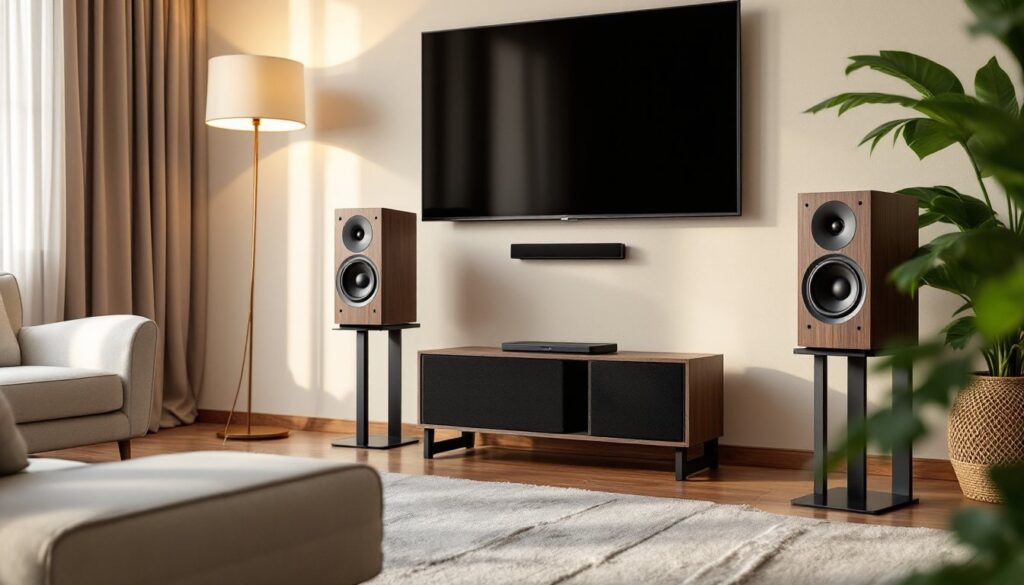
Bookshelf speakers are compact, passive or powered audio units designed to sit on elevated surfaces rather than directly on the floor. Unlike tower speakers, which use multiple large drivers in tall cabinets, bookshelf models rely on smaller woofers (typically 4–6.5 inches) paired with tweeters to cover the full audio spectrum. Most measure 10–16 inches tall and weigh 10–20 pounds each.
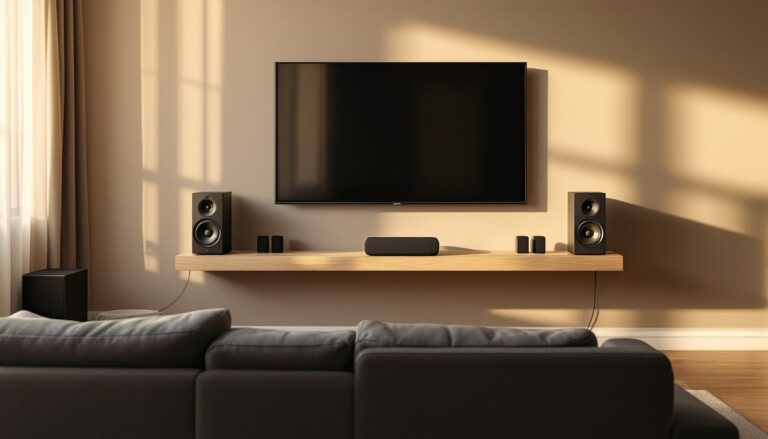
The name’s a bit misleading, placing speakers directly on a bookshelf without isolation pads usually causes resonance issues. They perform best on dedicated stands or wall-mounted brackets that position the tweeter at ear level when seated. The compact footprint makes them ideal for apartments, condos, or living rooms where floor space is at a premium.
Homeowners choose bookshelf speakers for home theaters because they balance performance with practicality. A pair of quality bookshelf speakers as front left/right channels can outperform many all-in-one soundbars, especially when paired with a dedicated center channel and subwoofer. They’re also easier to reposition during room layout changes, and most models work equally well for stereo music listening and multichannel movie audio.
Passive bookshelf speakers require a separate amplifier or AV receiver, which gives users more flexibility to upgrade components over time. Powered (active) bookshelf speakers include built-in amplification, reducing cable clutter but limiting future expansion. For home theater use, passive models integrated with an AV receiver offer better control over surround sound formats like Dolby Atmos or DTS:X.
Key Features to Look for When Shopping for Bookshelf Speakers
Frequency response indicates the range of sound a speaker can reproduce, measured in hertz (Hz). Look for models rated 50 Hz–20 kHz or lower on the bass end. Speakers that drop below 50 Hz reduce the workload on a subwoofer, though most bookshelf designs still benefit from a dedicated sub to handle deep bass effects.
Sensitivity rating, measured in decibels (dB), tells how efficiently a speaker converts power into volume. A speaker rated at 88 dB or higher works well with mid-power receivers (50–75 watts per channel). Lower sensitivity models (below 86 dB) need more amplifier power to reach the same volume levels, which matters in larger rooms or for users who prefer high playback levels.
Impedance, typically 4, 6, or 8 ohms, affects how much current the speaker draws from an amplifier. Most home theater receivers handle 6–8 ohm speakers without issue. Pairing 4-ohm speakers with a receiver not rated for that impedance can cause overheating or trigger protection circuits. Always check the receiver’s specs before buying.
Cabinet construction impacts sound quality more than most shoppers realize. MDF (medium-density fiberboard) cabinets dampen internal vibrations better than plastic or thin wood. Look for models with internal bracing visible through the port or described in manufacturer specs. Rear-ported designs need clearance from walls (4–8 inches minimum) to avoid bass muddiness, while sealed (acoustic suspension) cabinets offer more placement flexibility.
Speaker Size and Power Handling
Woofer diameter directly affects bass extension and volume capacity. A 5.25-inch woofer handles most movie dialogue and mid-range effects cleanly but may strain during bass-heavy action scenes without subwoofer support. 6.5-inch woofers provide fuller low-end response and can cover for modest subwoofers in smaller rooms. Speakers with dual woofers (sometimes called MTM or D’Appolito configurations) increase bass output and improve off-axis listening, useful when seating isn’t perfectly centered.
Power handling specs list continuous (RMS) and peak wattage ratings. Match the RMS rating to the amplifier’s output, a receiver pushing 75 watts per channel works well with speakers rated for 50–100 watts RMS. Underpowering speakers isn’t dangerous, but overpowering them can damage voice coils if someone cranks distorted audio at high volumes. Industry reviewers often note that speakers rated closer to real-world testing, like those covered in bookshelf speaker evaluations, provide more reliable performance expectations than spec sheets alone.
Optimal Placement and Positioning for Maximum Sound Quality
Tweeters at ear level is the golden rule. When seated in the primary listening position, the tweeter should align within 6–12 inches of ear height. This keeps high-frequency audio (above 2 kHz) clear and centered instead of bouncing off ceilings or floors. Adjustable speaker stands (24–36 inches tall) or wall-mounted brackets with tilt adjustment make this achievable in most rooms.
Front left and right speakers should form an equilateral triangle with the main seating position. If the couch is 10 feet from the TV, place speakers about 10 feet apart, angled inward 10–15 degrees. This creates a coherent soundstage where effects pan smoothly across channels. Placing speakers too close together narrows the stereo image: too far apart creates a hollow center.
Wall proximity affects bass response dramatically. Placing bookshelf speakers within 12 inches of a rear wall boosts bass output by 3–6 dB due to boundary reinforcement. Corner placement amplifies this effect even more, which sounds appealing but often creates boomy, one-note bass that muddies dialogue. If space forces near-wall placement, use foam port plugs (included with some models) or position speakers 4–6 inches out with a slight toe-in angle.
Avoid placing speakers inside entertainment centers or cubbies. Cabinet walls reflect sound back into the speaker, causing phase cancellation and frequency peaks that color the audio. If shelf placement is unavoidable, pull speakers to the front edge and add isolation pads, dense foam or rubber pads that decouple the speaker from the surface. This reduces vibration transfer that causes rattles or smears transient sounds like gunshots or drum hits.
For surround channels in a 5.1 or 7.1 setup, bookshelf speakers mounted 2–3 feet above ear level and slightly behind the seating area work well. Angle them toward the listening position but not directly at listeners’ ears, diffuse sound creates better ambient effects than focused beams.
Budget-Friendly vs. Premium Options: What’s Worth the Investment?
Entry-level bookshelf speakers ($100–$300 per pair) often use plastic tweeters and single-woofer designs. They handle dialogue and casual movie watching fine but compress dynamics during loud, complex scenes. Amplifier matching matters more at this price point, pairing budget speakers with a quality receiver yields better results than expensive speakers on a weak amp. Powered models in this range simplify setup but limit future upgrades.
Mid-tier options ($300–$700 per pair) typically feature silk or aluminum tweeters, better crossover networks, and MDF cabinets with internal bracing. The performance jump is noticeable: smoother frequency response, less distortion at high volumes, and improved off-axis sound. These speakers pair well with popular AV receivers in the 75–100 watt range and integrate cleanly into 5.1 or 7.2 home theater systems. Many tech reviewers from outlets like Digital Trends focus on this category because it offers the best balance of performance and value for most homeowners.
Premium bookshelf speakers ($700–$2,000+ per pair) use exotic materials like beryllium tweeters, Kevlar woofers, or ribbon drivers. Cabinet construction includes extensive internal damping and CNC-machined baffles to eliminate resonance. These speakers reveal nuances in soundtracks, the rustle of clothing, the decay of a piano note, spatial cues in Atmos mixes, that cheaper models gloss over. But, they demand high-quality source material and clean amplification to justify the cost. Pairing $1,500 speakers with a $300 receiver and compressed streaming audio wastes their potential.
Diminishing returns kick in around $1,000 per pair for most listeners. The difference between $500 and $1,000 speakers is significant: the jump from $1,000 to $2,000 is subtler and room-dependent. Poor room acoustics (hard floors, bare walls, irregular dimensions) mask the benefits of premium speakers. Investing $500 in acoustic panels or bass traps often improves sound more than upgrading from mid-tier to flagship speakers.
Used market caution: Bookshelf speakers hold up well if not abused, making used purchases viable. Check foam surrounds (the ring around the woofer cone) for cracks or deterioration, replacements cost $20–$50 per speaker but require DIY skills or a repair shop. Test both channels at moderate volume for rattles, distortion, or dead drivers before buying.
DIY Installation Tips for Homeowners
Wall mounting requires studs or heavy-duty drywall anchors. Bookshelf speakers weigh 10–20 pounds each, so toggle bolts rated for 50+ pounds or direct stud mounting (using #10 wood screws, 2.5–3 inches long) are necessary. Locate studs with a stud finder 16 or 24 inches on-center. If stud placement doesn’t align with desired speaker positions, use a horizontal mounting board (1×6 or 1×8 pine) screwed into multiple studs, then attach speaker brackets to the board.
Most speaker brackets tilt and swivel. Level the bracket before tightening all screws, an unlevel speaker skews the soundstage. Run speaker wire through the wall using low-voltage mounting brackets (single-gang cut-in boxes) for a clean look. Standard 16-gauge speaker wire works for runs under 50 feet: use 14-gauge for longer distances to minimize resistance. Label wires at both ends (left/right, positive/negative) with tape or heat-shrink markers before pulling them through walls.
Stand placement is simpler but requires attention to stability. Fill hollow speaker stands with sand or lead shot to add mass and dampen resonance. Most stands include threaded posts that mate with inserts on the speaker’s bottom panel, apply a rubber washer between post and speaker to prevent rattles. Carpet spikes (included with many stands) pierce through carpet to the subfloor, improving stability on soft surfaces. On hard floors, use rubber feet or felt pads to prevent scratches and vibration coupling.
Safety note: Wear safety glasses when drilling overhead for wall mounts. Check for electrical wiring or plumbing behind walls with a multi-scanner before cutting or drilling, hitting a wire or pipe turns a simple install into a costly repair. If running wire through walls near existing electrical, maintain 6–12 inches separation to avoid interference, or use shielded speaker cable.
Test polarity before finalizing the install. Play mono audio (like a center-panned vocal track) and listen from the seating position. If bass sounds thin or vocals seem diffuse, one speaker is wired backward, swap the positive and negative connections on that speaker. Most modern speakers use color-coded or labeled terminals, but double-checking prevents troubleshooting later.
Pairing Bookshelf Speakers with Your Existing Home Theater Setup
AV receiver compatibility starts with impedance matching. Most receivers safely drive 6–8 ohm speakers: some handle 4 ohms but may reduce power output or activate thermal protection sooner. Check the receiver’s manual for the minimum impedance rating. If running a 7.1 system with all channels driven, ensure the receiver’s power supply can handle the load, budget receivers often can’t sustain rated wattage across all channels simultaneously.
Set speaker size to “Small” in the receiver’s setup menu, even for larger bookshelf models. This routes bass below 80 Hz to the subwoofer, which handles low frequencies more efficiently and prevents bookshelf speakers from distorting during loud, bass-heavy scenes. Use the receiver’s auto-calibration system (Audyssey, YPAO, Dirac) as a starting point, then fine-tune levels and crossovers manually. Place the calibration mic at head height in the primary seat: run multiple measurements if the system allows it.
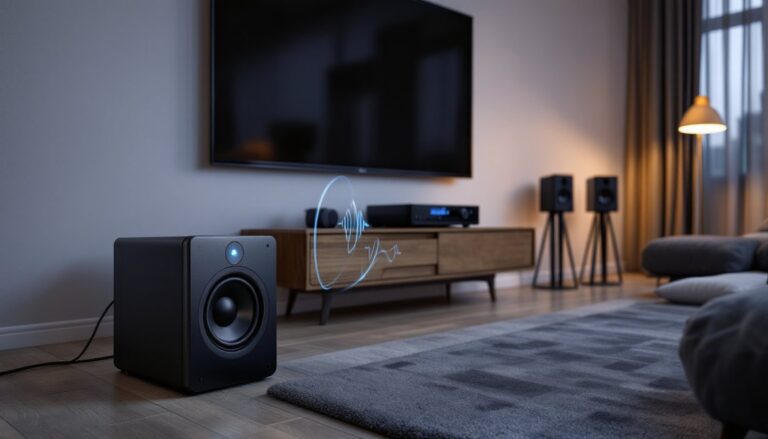
Subwoofer integration makes or breaks bookshelf speaker performance. A powered subwoofer with a 10–12 inch driver fills the 20–80 Hz range that bookshelf speakers can’t reproduce cleanly. Place the sub near a corner for maximum output or use the “subwoofer crawl” method: place the sub in the main seat, play bass-heavy content, and crawl around the room’s perimeter to find where bass sounds smoothest and most even. That’s where the sub should go. Many resources from sources like CNET cover subwoofer tuning in depth for those wanting to dial in precise response curves.
Center channel matching matters for dialogue clarity. Ideally, use a center speaker from the same manufacturer and product line as the front bookshelf pair, matching tweeters and voicing ensures seamless pans across the front soundstage. If using a mismatched center, set it to “Small” and adjust the crossover slightly higher (90–100 Hz) to blend better with the mains.
For stereo music listening, many receivers offer a “Pure Direct” or “Stereo” mode that bypasses video processing and DSP, reducing electronic noise. Bookshelf speakers often outperform dedicated music speakers in the same price range because home theater models prioritize dynamic range and clarity over warmth or coloration. Switching between movie and music modes takes seconds in most receiver menus, giving users flexibility without needing separate systems.