When it comes to working from home, a chaotic environment can be a productivity killer. Who can focus on that big project with a stack of unread mail staring down from the desk? Fear not. With the right home office organization tips, it’s possible to turn your cluttered space into a serene oasis of efficiency. In this guide, we’ll investigate into practical strategies to declutter, optimize, and personalize your workspace, making every minute count. Let’s tackle this quest for the perfectly organized home office together, shall we?
Assessing Your Space and Needs

Determining Your Work Style
Before diving into organization hacks, understanding one’s work style is crucial. Is it all about vibrant creativity or a structured, corporate vibe? Some thrive amid a flurry of sticky notes and colorful sketches, while others need pristine minimalism to focus. This self-awareness lays the groundwork for a design that promotes productivity rather than distractions.
Evaluating Available Space
Next, take stock of the space available. Is it a spare room, a corner in the living room, or a dedicated nook in the kitchen? Knowing the dimensions and the layout helps in devising a plan that maximizes functionality. Remember, every inch counts, even if it’s just a repurposed bookshelf or a corner desk.
Identifying Essential Tools and Supplies
Finally, think about the vital tools needed to work effectively. A computer, a reliable printer, and some stationery, those go without saying. But, other essentials may include high-quality headphones or even a desk plant for inspiration. Making a checklist of these items ensures that everything has its designated spot, minimizing time spent searching for lost items.
Creating a Functional Layout
Zoning Your Office Area
Once the needs are established, zoning the workspace is next. Define specific areas for various tasks. For instance, one area can be for computer work, while another can concentrate on brainstorming or reading. Walls can serve as boundaries, use shelves to delineate zones without the need for actual walls.
Choosing the Right Furniture
Then comes furniture selection, a step that can make or break the comfort and functionality of the office. Invest in ergonomic chairs and spacious desks that match the space available. A good chair doesn’t just offer comfort: it supports productivity, making those long hours feel less daunting.
Implementing Effective Storage Solutions
Decluttering Regularly
Decluttering can feel like a challenging job, and the truth is, it’s easier said than done. Establishing a routine for decluttering can make it manageable. Set aside time weekly or monthly to assess items that must stay or go. Those old cables and empty notebooks? They deserve to be tossed out.
Using Organizers and Containers
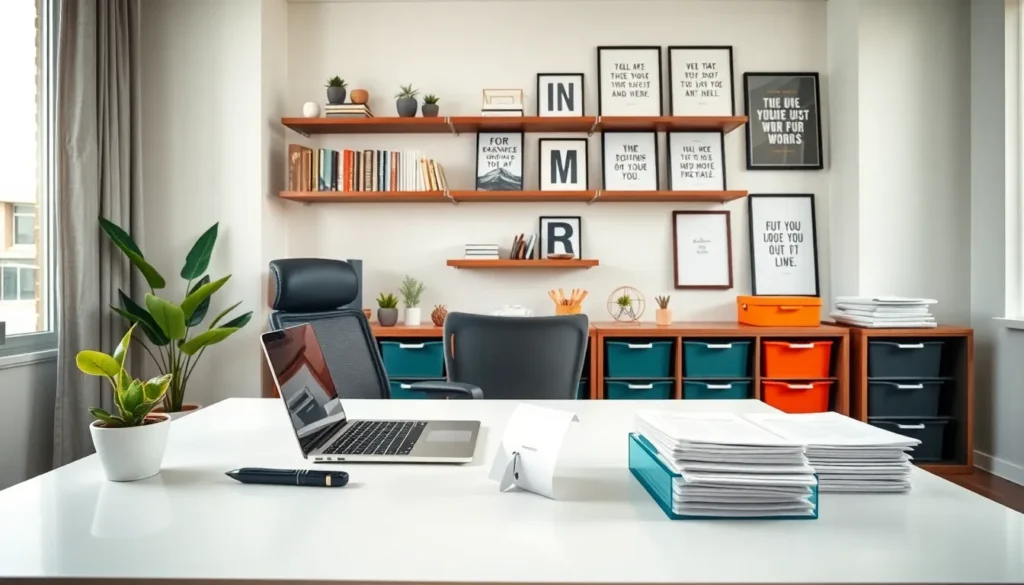
Organizers are a blessing in disguise. Invest in colorful bins or sleek drawer organizers that make items not only easier to find but also visually appealing. Labels can also work wonders, there’s something satisfying about opening a drawer labeled ‘office supplies’ and finding just what you need.
Incorporating Technology for Efficiency
Leveraging Digital Tools
Technology can work double-time in the organization realm. Use apps like Trello or Notion to manage tasks and projects digitally, keeping everything easily accessible and visually organized. This reduces paper clutter and streamlines workflow, all in one fell swoop.
Managing Paperwork Effectively
But let’s be honest: paperwork still exists. Hence, establishing a filing system is essential. Create a hierarchy for documents, categorizing them by importance or type. Digital backups can further alleviate anxiety about losing crucial papers.
Enhancing Comfort and Productivity
Ergonomic Furniture Solutions
While aesthetics matter, comfort should never take a backseat, especially during those long work hours. Ergonomic furniture is designed to support posture and reduce strain. Investing now means fewer backaches down the road, which pays off in productivity.
Incorporating Personal Touches
Add some personality to the workspace to make it feel less sterile. Personal touches like family photos, inspirational quotes, or favorite artwork can foster a more inviting environment. A few plants can also breathe life into the room, making it feel more homely.
Maintaining Your Organized Space
Establishing Routine Upkeep
With everything in place, keeping the space organized requires a maintenance routine. Spend a few moments each day tidying up, this simple habit prevents chaos from creeping back in. Routine is key to keeping the workspace in tip-top shape.
Adjusting as Needed Over Time
As work habits or needs change, don’t hesitate to adjust the workspace accordingly. Flexibility allows for tweaking layouts or swapping out furniture to ensure that the office remains perfectly tailored to any evolving requirements.