Table of Contents
ToggleIndoor air can harbor five times more pollutants than outdoor air, including dust, pet dander, mold spores, and volatile organic compounds. For homeowners tackling renovations, dealing with seasonal allergies, or simply wanting cleaner air, a HEPA air purifier isn’t just another appliance, it’s a practical tool that filters out 99.97% of airborne particles down to 0.3 microns. Whether someone’s sanding drywall, living with pets, or concerned about wildfire smoke drifting through the neighborhood, understanding how these units work and where to place them makes the difference between wasted money and genuinely cleaner air.
Key Takeaways
- A HEPA air purifier captures 99.97% of airborne particles down to 0.3 microns, making it essential for homes dealing with construction dust, pet dander, pollen, mold spores, and seasonal air quality issues.
- True HEPA filters meet U.S. Department of Energy standards through three filtration mechanisms—interception, impaction, and diffusion—while ‘HEPA-type’ filters only capture 85-90% and allow significantly more pollutants to pass through.
- Choose a home HEPA air purifier based on Clean Air Delivery Rate (CADR) for 4-5 air changes per hour in your room, as manufacturer ‘room size’ claims often underestimate coverage needs for high-pollution scenarios.
- Position your HEPA air purifier at least 12 inches from walls and furniture in rooms where you spend the most time—bedrooms, living areas, and home offices—avoiding heat sources and concentrated pollution areas.
- Maintain your purifier by checking pre-filters monthly and replacing HEPA filters every 6-12 months based on visual inspection, never washing or vacuuming the HEPA filter itself as it will damage the filtration efficiency.
- Running a HEPA air purifier costs approximately $5-7 monthly in electricity while filtering out cooking particulates, wildfire smoke, and indoor air pollutants that accumulate in newer, tightly-sealed homes.
What Is a HEPA Air Purifier and How Does It Work?
HEPA stands for High-Efficiency Particulate Air. A true HEPA filter must meet standards set by the U.S. Department of Energy, capturing at least 99.97% of particles 0.3 microns in diameter. That’s smaller than most bacteria and includes common irritants like pollen, dust mites, and mold spores.
The mechanics are straightforward. A fan pulls air through a dense, pleated filter made of randomly arranged fibers, typically fiberglass. Particles get trapped through three mechanisms: interception (particles follow airflow and stick to fibers), impaction (larger particles can’t navigate the fiber maze and crash into them), and diffusion (tiny particles bounce around and eventually collide with a fiber).
Most units use a multi-stage filtration system. A pre-filter catches large debris like hair and lint, extending the HEPA filter’s life. Some models add an activated carbon filter to absorb odors and volatile organic compounds (VOCs) from paint, cleaning products, or cooking. The HEPA filter does the heavy lifting on particulates, while carbon handles gases, two different jobs requiring two filter types.
It’s worth noting that “HEPA-type” or “HEPA-like” filters don’t meet the same standard. They might capture 85-90% of particles, which sounds close but means ten times more pollutants slip through compared to true HEPA. Check the specs before buying.
Why Every Home Needs a HEPA Air Purifier
Construction dust is the obvious case. Drywall sanding, cutting lumber, or demolition generates fine particulates that settle everywhere and linger in the air for hours. A HEPA unit running during and after work keeps that dust from spreading through HVAC ducts and embedding in carpets.
But everyday life generates plenty of airborne junk. Pet dander, a primary allergen, measures 2.5 microns or smaller, well within HEPA range. Seasonal pollen drifts in through open windows and hitches rides on clothing. Mold spores thrive in humid areas like basements and bathrooms, and they’re light enough to circulate throughout a home.
Cooking releases particulates too. Frying foods produces aerosolized oils, and gas stoves emit nitrogen dioxide and carbon monoxide. While a range hood vents some of that outdoors, plenty escapes into living spaces. A purifier in or near the kitchen addresses what the hood misses.
Wildfire season has become a recurring issue across the western U.S., and smoke contains fine particulates (PM2.5) that penetrate deep into lungs. During poor air quality events, keeping windows closed and running a HEPA purifier significantly reduces indoor PM2.5 levels.
Finally, newer homes are built tighter for energy efficiency, which is great for heating and cooling bills but means less natural air exchange. Pollutants accumulate without adequate ventilation. A purifier doesn’t replace ventilation, open windows when air quality permits, but it’s a practical supplement when outdoor air isn’t an option. According to leading appliance testers, even budget models show measurable improvements in particulate counts within an hour of operation.
Choosing the Right HEPA Air Purifier for Your Home
Not all purifiers are created equal. Matching the unit to the space and usage prevents disappointment.
Room Size and Coverage Area
Manufacturers rate purifiers by Clean Air Delivery Rate (CADR), measured in cubic feet per minute (CFM). CADR indicates how much filtered air the unit delivers for smoke, dust, and pollen, three separate ratings because particle sizes differ.
For proper performance, the CADR should allow for four to five air changes per hour (ACH) in the target room. Calculate room volume (length × width × ceiling height), then multiply by five and divide by 60 to get the minimum CFM needed. For a 12′ × 15′ room with 8′ ceilings (1,440 cubic feet), that’s 120 CFM.
Many manufacturers list maximum room size instead of CADR, often based on two air changes per hour. That’s insufficient for high-pollution scenarios like active construction or wildfire smoke. If a unit says it covers 300 square feet, it’ll work better in a 200-square-foot space.
Don’t try to purify an entire house with one unit. Air doesn’t circulate freely between rooms, especially with doors closed. Multiple smaller purifiers outperform a single oversized one parked in a hallway.
Noise Levels and Energy Efficiency
Purifiers run continuously for best results, so noise and power consumption matter. Check decibel ratings at different fan speeds. Low settings around 30-40 dB (whisper to library level) work for bedrooms. Higher settings can hit 60 dB (normal conversation), acceptable for living areas during the day but disruptive at night.
Many smart home devices now integrate air quality monitoring, and modern purifiers increasingly include auto modes that adjust fan speed based on detected particle levels. This balances performance with noise and energy use.
Power consumption typically ranges from 30 to 100 watts depending on size and fan speed. Running a 50-watt unit 24/7 costs roughly $5-7 monthly at average U.S. electricity rates, less than a couple of lattes. Units with Energy Star certification meet efficiency standards and cost less over time.
Filter replacement is the ongoing expense. HEPA filters last 6-12 months with typical use, longer if a home is relatively clean and shorter during heavy renovation or wildfire season. Replacement filters run $30-80 depending on the model. Some manufacturers charge premium prices for proprietary filters, so factor that into the purchase decision. Activated carbon pre-filters need replacement every 3-6 months but cost less, usually $10-20.
Where to Place Your HEPA Air Purifier for Maximum Effectiveness
Placement directly affects performance. Air has to reach the intake for the purifier to do its job.
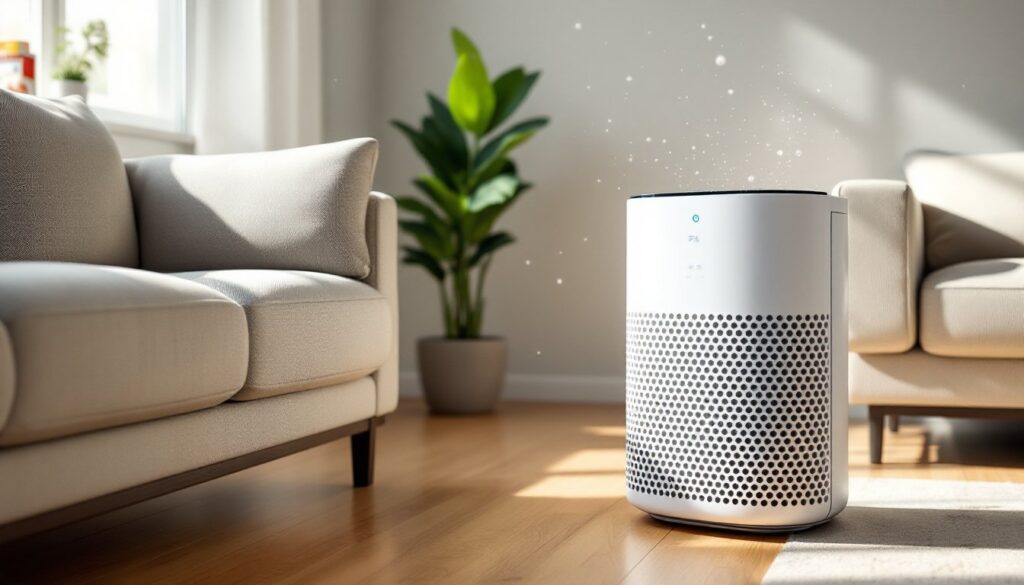
Set the unit at least 12 inches away from walls and furniture. Blocking the intake or exhaust restricts airflow and reduces efficiency. Corner placement looks tidy but often creates dead zones where air doesn’t circulate well.
Place purifiers in the rooms where people spend the most time, bedrooms, living rooms, home offices. A bedroom unit should sit near the bed but not directly beside it to avoid fan noise disrupting sleep. If someone’s particularly sensitive to allergens or recovering from respiratory illness, positioning the unit within a few feet of the head of the bed targets the breathing zone.
Avoid placing purifiers near sources of pollutants like litter boxes or kitchen stoves if that’s the only unit in the home. The purifier will work overtime on concentrated contaminants and neglect the rest of the space. Better to place it centrally and let normal air circulation bring pollutants to the filter.
During renovation work, stage purifiers just outside the work area with doors closed to the rest of the house. This creates negative pressure in the work zone, preventing dust migration. Run the purifier on high, and seal gaps under doors with towels if necessary.
Elevation matters less than clearance and airflow. Floor placement works fine for most units since pollutants eventually settle and rise with air currents. Some people prefer a table or shelf to keep the unit away from curious pets or toddlers.
Don’t put purifiers near electronics or appliances that generate heat, like TVs or space heaters. Heat can affect internal sensors that monitor air quality, causing the unit to misread conditions and run incorrectly. Many resources covering smart home technology emphasize keeping air quality monitors away from heat sources for this reason.
Maintaining Your HEPA Air Purifier: Tips and Best Practices
Maintenance is minimal but non-negotiable. A clogged filter turns a purifier into an expensive fan.
Check pre-filters monthly. Most are washable or vacuumable. Rinse fabric pre-filters in lukewarm water, let them air dry completely (24 hours), then reinstall. Vacuuming works for foam pre-filters, use a brush attachment and low suction to avoid damage.
Replace HEPA filters on schedule. Manufacturers specify replacement intervals based on average use, but inspect the filter when you change the pre-filter. If it looks dark gray or black instead of white or off-white, replace it early. A heavily loaded filter restricts airflow, forcing the fan to work harder and reducing overall effectiveness.
Some purifiers include filter change indicators, either a light or app notification. These typically count run hours, not actual filter condition. If someone runs a unit in a dusty workshop, the filter will clog faster than the timer suggests. Use indicators as a reminder, not gospel.
Don’t wash or vacuum HEPA filters. The dense fiber structure can’t handle it, washing tears fibers and vacuuming compresses them, destroying filtration efficiency. HEPA filters are consumables, not permanent components.
Wipe down the exterior casing with a damp cloth every few weeks to prevent dust buildup around intake and exhaust vents. Unplug the unit first. Avoid spraying cleaners directly on the unit, moisture and electronics don’t mix.
For homes following seasonal cleaning schedules, spring and fall are natural times to inspect purifiers, replace filters if needed, and verify placement still makes sense after rearranging furniture or finishing projects.
Monitor performance. If a normally quiet unit suddenly gets loud, the fan may be working harder due to a clogged filter or obstructed airflow. If the air doesn’t feel as clean, check that the unit’s still appropriately sized for the space, adding furniture or closing off part of a room changes airflow dynamics.
Storing a purifier during moves or renovations? Remove and dispose of used filters first. Storing a loaded filter just lets trapped pollutants re-enter the air when the unit restarts. Seal intakes and exhausts with plastic wrap to keep dust out of the fan and motor.