Table of Contents
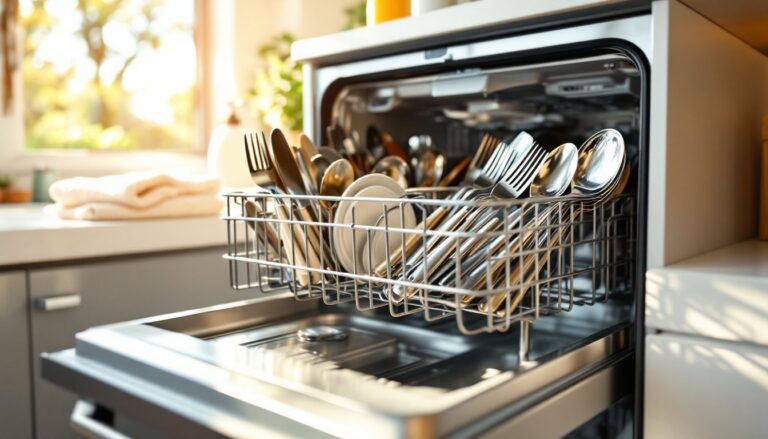
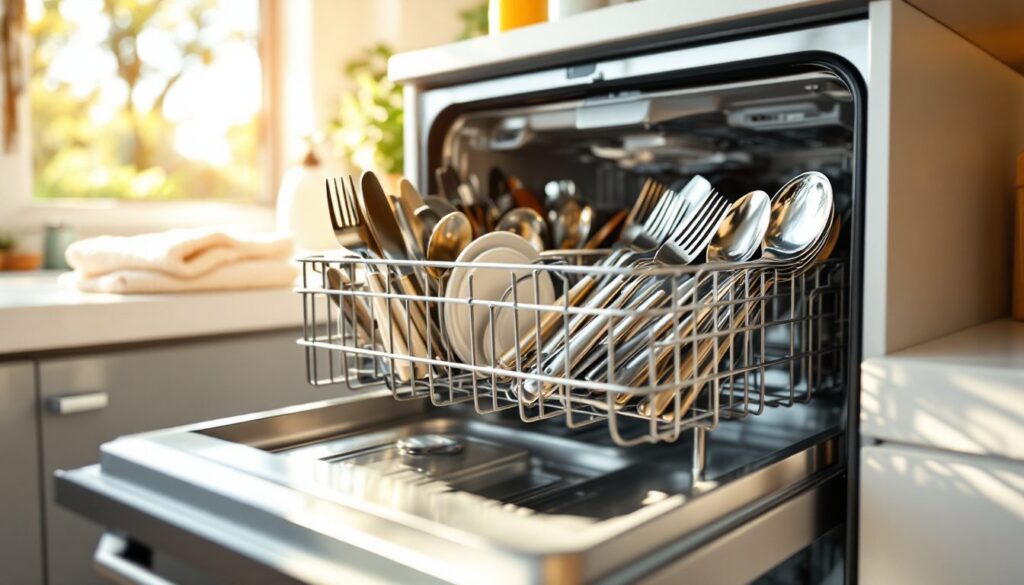
ToggleEvery household has their own dishwasher-loading ritual, and few debates get as heated as the silverware question: handles up or down? Some swear by handles-up for safety, while others insist handles-down delivers cleaner forks and spoons. The answer isn’t as simple as picking a side. The best approach depends on your dishwasher design, what you’re washing, and whether you’ve got kids unloading. This guide breaks down the pros and cons of each method, explains what cleaning experts actually recommend, and offers a practical strategy that balances hygiene, safety, and spotless results.
Key Takeaways
- Experts recommend loading silverware handles down for optimal cleaning, as this orientation directs water and detergent to fork tines and spoon bowls that touch food, while preventing nesting and pooling.
- Knives should always go handles up for safety reasons, protecting fingers from sharp blades when unloading and preventing blade dulling from contact with the basket.
- A mixed-loading strategy balances both cleaning performance and safety by treating different utensil types differently: forks and spoons handles-down, knives handles-up, and serving utensils flat on the top rack.
- Overloading the silverware basket, letting small items fall through slots, and blocking the spray arm are common mistakes that sabotage dishwasher cleaning results.
- In households with children or elderly family members, loading silverware handles up prioritizes injury prevention over marginal cleaning gains.
- Regular filter maintenance, running hot water before starting the cycle, and unloading the bottom rack first are critical steps for achieving spotless silverware every time.
The Great Silverware Debate: Safety vs. Cleaning Power
The silverware-loading argument boils down to two competing priorities: getting utensils truly clean versus avoiding puncture wounds when unloading.
Handles-down advocates argue that exposing the eating surfaces, fork tines, spoon bowls, knife blades, to direct spray jets produces better cleaning results. The water pressure and detergent reach the parts that touch food, rather than washing already-clean handles. This orientation also prevents utensils from nesting together (especially spoons), which blocks water flow and leaves residue.
Handles-up supporters prioritize safety. Sharp knife points and fork tines facing up can stab fingers when reaching into the caddy, particularly dangerous for kids or anyone unloading in a hurry. Handles-up also means you’re grabbing the handle when putting utensils away, reducing contact with the eating surface and keeping things more hygienic post-wash.
Most dishwasher manufacturers recognize this tension. Many modern dishwashers feature basket designs with covered tops or individual slots that hold utensils horizontally or at angles, eliminating the up-or-down choice entirely. If your machine has this style, use it, it’s designed to solve both problems. But if you’ve got a traditional open basket with vertical slots, you’ll need to make a call.
Why Experts Recommend Loading Silverware Handles Down
From a pure cleaning standpoint, most appliance engineers and cleaning experts recommend loading forks and spoons handles-down. Here’s why that method wins on performance.
Better water coverage. Dishwasher spray arms rotate at the bottom and middle of the tub, sending jets upward and outward. When fork tines and spoon bowls point downward, they face these jets directly. Food residue, grease, and dried-on gunk get hit with high-pressure water and detergent exactly where they’re needed. Handles, which rarely touch food, don’t need the same level of cleaning.
Prevents nesting. Spoons in particular love to spoon. When multiple spoons sit handles-up, their bowls nestle together, blocking water from reaching inner surfaces. Loading handles-down encourages separation, spoons still touch, but the bowls face different directions and allow spray to penetrate gaps.
Avoids pooling. Some utensils, especially large serving spoons or ladles, can trap water in their bowls when positioned handles-up. That water may contain food particles or detergent, leaving spots or residue even after the dry cycle. Handles-down lets gravity drain everything cleanly.
The main caveat: knives should generally go handles-up for safety, even if other utensils go down. A sharp chef’s knife or paring knife pointing upward is a legitimate hazard. Blade-down also protects your knife edges from banging against the basket and dulling. If your set includes high-quality knives, consider hand-washing them instead, dishwasher detergent’s abrasiveness and high heat can damage both blades and handles over time.
When Loading Silverware Handles Up Makes Sense
Handles-up isn’t wrong, it’s just optimized for different priorities. In households with young children, elderly family members, or anyone with vision or mobility challenges, safety trumps a marginal cleaning advantage.
Injury prevention. Fork tines are sharp enough to puncture skin, especially when someone’s reaching in without looking. Kids unloading the dishwasher after school won’t always pay attention. Handles-up means fingers contact blunt handles, not pointy ends. If you’ve ever stabbed yourself unloading, you know this isn’t theoretical.
Hygiene during unloading. Grabbing utensils by the handle, rather than touching the fork tines or spoon bowl you’re about to eat with, feels cleaner to many people. Even though the dishwasher sanitizes everything, the psychological factor matters. If it encourages consistent dishwasher use instead of leaving dirty dishes in the sink, that’s a win.
Works fine for lightly soiled items. If you rinse dishes before loading (even though detergent working better with some soil present), or if your silverware is only lightly used, handles-up may clean adequately. Modern dishwashers with powerful pumps and multiple spray arms can often compensate for sub-optimal loading. You might not notice a performance difference unless you’re dealing with dried egg yolk or peanut butter.
One exception: plastic-handled utensils or wooden tools sometimes do better handles-up, as it keeps heat-sensitive materials farther from the heating element at the bottom of the tub. But, many wooden utensils shouldn’t go in the dishwasher at all, the heat and moisture cycles can crack wood and loosen glue joints.
The Best Silverware Loading Strategy for Your Dishwasher
Most dishwasher pros don’t actually pick one absolute rule. Instead, they recommend a mixed-loading method that tailors placement to each utensil type.
Mixed Loading Method
This approach balances cleaning performance and safety by treating different utensils differently:
- Forks: handles down. Tines pointed downward get the best spray coverage and won’t nest. The tines are sharp but less dangerous than knife points.
- Spoons: handles down, alternated. Prevent nesting by mixing large and small spoons, or intentionally spacing them in different slots. Some people alternate one handles-up, one handles-down to force separation.
- Knives: handles up. Safety first. Keep sharp blades pointing down. Better yet, place knives flat on the top rack if there’s room, this is gentler on the blade and safer all around.
- Serving utensils and large items: handles up or flat. Ladles, spatulas, and serving spoons often don’t fit well in the caddy. Laying them flat on the top rack prevents them from blocking spray arms and ensures even cleaning.
Distribute utensil types across the basket. Don’t cluster all the forks in one section, spread them out. This prevents overcrowding in any single area and improves water circulation. Check your dishwasher manual: some models have specific recommendations for basket loading that account for spray arm patterns unique to that machine.
If your dishwasher has a third rack (common in newer Bosch, KitchenAid, and other premium models), use it for flatware. These racks hold utensils horizontally with tines and bowls facing down, giving you the cleaning benefits of handles-down with none of the safety risk. It’s the best of both worlds and frees up lower-rack space for larger items.
Common Silverware Loading Mistakes to Avoid
Even with a solid handles-up-or-down strategy, several loading errors can sabotage your results. Here’s what to watch for.
Overloading the basket. Jamming too many utensils into the caddy blocks water flow and prevents detergent from reaching all surfaces. If utensils are touching side-by-side all the way around, you’ve overloaded. Leave breathing room. Run a second load if needed, it’s cheaper than re-washing by hand.
Letting utensils fall through the basket holes. Small items like baby spoons, cocktail forks, or espresso spoons can slip through basket slots and fall to the bottom of the tub, potentially blocking the spray arm or ending up near the heating element. Some baskets have removable inserts or adjustable dividers to prevent this. If yours doesn’t, consider placing small items in a mesh laundry bag (clean, dedicated to kitchen use) on the top rack.
Blocking the spray arm. A long-handled spatula or serving spoon hanging out of the caddy can obstruct the rotating spray arm. If you hear a knocking sound during the wash cycle, something’s in the way. Always spin the spray arms by hand before starting the cycle to check clearance.
Mixing silver and stainless. Don’t load sterling silver or silver-plated utensils with stainless steel in the same caddy. The two metals can react in the high-heat, high-moisture environment, causing pitting or tarnish on the silver. Wash silver separately, ideally by hand. Same goes for pewter, copper, or brass utensils.
Ignoring the dishwasher manual. Manufacturers test loading configurations during design. If your manual has a recommended basket layout, it’s based on actual spray patterns and water pressure in your model. Home organization strategies often emphasize reading appliance manuals, they’re not just legal boilerplate.
Tips for Getting Cleaner, Safer Silverware Every Cycle
Once you’ve settled on a loading method, these extra steps ensure spotless, safe results every time.
Scrape, don’t rinse. Modern dishwasher detergent (especially enzyme-based formulas) is designed to work on soiled dishes. A quick scrape to remove large food chunks is enough. Pre-rinsing everything can actually reduce cleaning performance, the enzymes need something to grab onto. If you see residue after a cycle, the problem is likely overloading, old detergent, or a clogged spray arm, not insufficient pre-rinsing.
Use the right detergent amount. More detergent doesn’t mean cleaner dishes. Follow the dosing instructions on the package and adjust for water hardness. If you have hard water, you may need a rinse aid to prevent spots and film on silverware. Soft water may require less detergent to avoid residue.
Run hot water before starting. Turn on your kitchen faucet until the water runs hot before starting the dishwasher. This ensures the first fill cycle uses hot water immediately, improving detergent activation and grease removal. Most dishwashers don’t heat water from cold, they rely on your water heater. 120–140°F is the ideal range.
Clean the filter regularly. A clogged filter reduces spray pressure and recirculates dirty water. Most dishwashers have a removable filter at the bottom of the tub that should be rinsed under hot water monthly. Check your manual for location and removal instructions. This is the single most overlooked maintenance task.
Unload bottom rack first. Water can pool on top-rack items during the cycle. If you unload the top rack first, that water drips onto the clean, dry silverware and dishes below. Always start with the bottom rack and work your way up.
Dry silverware promptly. Even with a heated dry cycle, some utensils may have water droplets, especially in the basket’s nooks. If you leave damp silverware sitting in the closed dishwasher for hours, it can develop spots or even rust (if you have low-quality stainless). Towel-dry any wet pieces or leave the door ajar for 15 minutes after the cycle ends to let steam escape.
For more kitchen organization tips that streamline cleanup and dishwashing routines, consider creating a daily rhythm: load throughout the day, run before bed, and unload first thing in the morning. Consistency matters more than perfection.