Table of Contents
ToggleCharlotte homeowners are transforming spare bedrooms, basements, and bonus rooms into dedicated entertainment spaces that rival commercial cinemas. With streaming content quality hitting new peaks and home theater equipment becoming more accessible, building a proper theater room isn’t just for tech enthusiasts anymore, it’s a practical investment that adds real value to daily living and resale appeal. Whether planning a full DIY build or working with local installers, understanding the trade-offs between equipment, layout, and budget helps Charlotte residents create spaces that deliver theater-grade experiences without unnecessary overspending or rookie mistakes.
Key Takeaways
- Home theater Charlotte installations in bonus rooms and basements are practical investments that add real resale value while delivering cinema-grade entertainment, with costs recouped within a few years of regular use.
- Room dimensions of at least 14 by 20 feet with 9–10-foot ceilings, proper moisture control, and dedicated electrical circuits are essential foundations for quality home theater performance.
- A 5.1 surround sound system with a quality AV receiver and subwoofer positioned strategically delivers dramatic audio improvements over standard TV speakers.
- Projectors offer true cinema scale (100–120 inches) but require dark rooms and bulb maintenance, while 75–85-inch 4K TVs work better in multipurpose spaces with ambient light.
- Mid-range home theater builds ($5,000–$12,000) balance quality equipment and professional calibration, while hybrid DIY-plus-professional approaches save money without compromising technical accuracy.
- Phased builds starting with display and basic audio, then adding speakers and acoustic treatments over time, help spread costs and avoid overspending relative to your home’s market value.
Why Charlotte Homeowners Are Investing in Home Theaters
Charlotte’s housing stock, especially in neighborhoods like Ballantyne, Myers Park, and Davidson, offers the square footage needed for dedicated theater rooms. Finished basements and bonus rooms over garages are common in homes built after 2000, providing ready-made candidates for conversion.
Streaming services now deliver 4K HDR content that actually benefits from quality displays and sound systems. The gap between what’s available at home versus what theaters offer has narrowed considerably. Families who used to spend $60–$100 per outing on tickets and concessions can recoup a modest home theater investment within a couple years of regular use.
Charlotte’s climate also plays a role. Hot, humid summers and unpredictable spring weather make indoor entertainment appealing. A well-designed theater room gets year-round use for movie nights, gaming, and sports viewing. Resale value matters here too, Charlotte’s competitive real estate market rewards finished, functional spaces that expand usable square footage.
Planning Your Charlotte Home Theater: Space and Layout Considerations
Room dimensions directly affect audio performance and seating arrangement. A space at least 12 feet wide by 15 feet deep works for basic setups, but 14 feet by 20 feet or larger allows for proper speaker placement and multiple seating rows. Rectangular rooms outperform square ones, parallel walls create fewer standing wave issues.
Ceiling height matters for projector mounting and acoustics. Standard 8-foot ceilings work, but 9 to 10 feet gives better sound dispersion and mounting flexibility. Check for joists running perpendicular to your desired screen wall, mounting a projector or heavy screen often requires hitting solid framing.
Basements present moisture challenges in Charlotte’s humid climate. Before finishing any below-grade space, verify proper exterior grading, working gutters, and intact foundation waterproofing. A dehumidifier rated for your square footage is non-negotiable, target 40–50% relative humidity to protect electronics and prevent mold on fabric treatments.
Electrical planning requires thought. Budget for at least two dedicated 20-amp circuits, one for video equipment, one for amplification. This prevents voltage drops when everything runs simultaneously. HDMI cable runs exceeding 25 feet should use active or fiber-optic cables to maintain 4K signal integrity. Conduit in walls during framing makes future upgrades simpler.
Lighting control affects viewing quality. Install dimmer switches or smart bulbs that can drop to near-zero output. Recessed can lights on the sides or rear create ambient lighting without screen glare. Avoid placing any light source where it reflects off the display surface.
Essential Equipment for Your Home Theater Setup
Display Options: Projectors vs. Large-Screen TVs
Projectors deliver true cinema scale, 100 to 120-inch diagonal images are standard with short-throw models. They require a dark room to perform well, which dedicated theater spaces provide. Expect to replace bulbs every 3,000 to 5,000 hours on lamp-based units, costing $150–$300 per replacement. Laser projectors eliminate bulb swaps but cost significantly more upfront.
Fixed-frame projection screens with 1.0 to 1.3 gain white materials suit most home setups. Gray screens help with black levels if ambient light control isn’t perfect. Tensioned screens stay flat: budget models can develop waves. Plan screen mounting to place the bottom edge 24 to 30 inches off the floor for typical seating heights.
Large 75 to 85-inch 4K TVs work well in multipurpose rooms or spaces with some ambient light. OLED panels deliver excellent black levels and color for movie content. LED/LCD models with full-array local dimming offer good performance at lower price points. Wall-mounting requires hitting studs with lag bolts rated for the TV’s weight, toggle anchors won’t cut it for 80+ pound displays.
Sound Systems That Deliver Cinema-Quality Audio
Surround sound separates home theaters from ordinary TV watching. A 5.1 system, left, center, right, two surrounds, one subwoofer, is the practical minimum. 7.1 or 5.1.2 Atmos configurations add height or rear channels for more immersive soundtracks, but require proper calibration to justify the added speakers.
AV receivers power and process audio. Look for units supporting HDMI 2.1 with eARC to handle current and near-future formats. Power ratings matter less than clean amplification, 75 to 100 watts per channel suffices for most rooms when paired with efficient speakers. Recent complete home theater systems provide matched components that simplify setup for first-time builders.
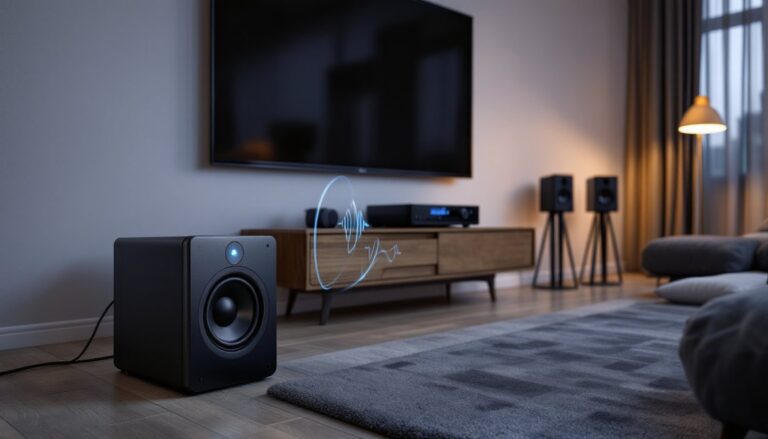
Subwoofer placement dramatically affects bass response. Corner placement maximizes output but can cause boominess. Midwall positions smooth response. Run a frequency sweep and move the sub in 6-inch increments until bass sounds even across seating positions. Dual subwoofers placed asymmetrically solve many room mode problems but double the cost.
In-wall and in-ceiling speakers save floor space and create clean aesthetics, but installation requires cutting drywall and fishing wire through cavities. Use 16-gauge speaker wire for runs under 50 feet. Label both ends before closing up walls, future troubleshooting will thank you.
DIY Home Theater Installation vs. Professional Services in Charlotte
DIY installation suits straightforward setups where equipment sits on furniture and wiring stays external. Mounting a TV, connecting an affordable soundbar system, and configuring a streaming device requires basic tools and patience, not specialized skills. YouTube and manufacturer manuals cover most consumer-grade equipment.
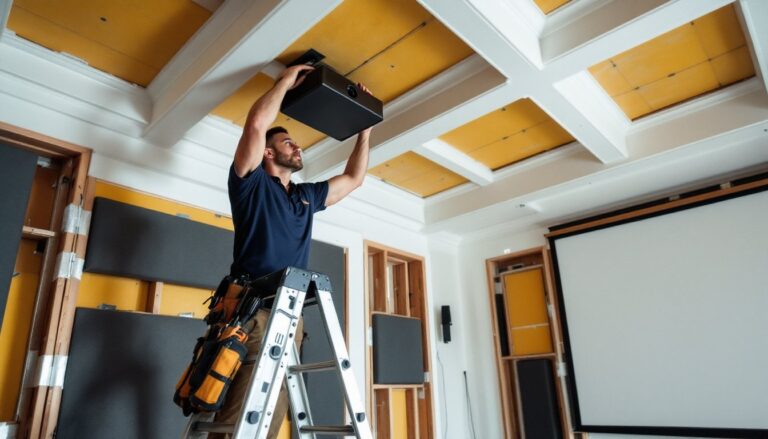
In-wall wiring, projector ceiling mounts, and acoustic treatments cross into territory where mistakes get expensive. Cutting into drywall to fish cables risks hitting electrical wiring or plumbing. Charlotte follows the 2018 IRC for residential work, low-voltage wiring has specific code requirements for fire-rated penetrations and cable support. Most jurisdictions don’t require permits for Class 2 wiring (speaker and HDMI runs), but check with Mecklenburg County or your local municipality.
Professional installers bring calibration equipment and experience with problem rooms. Audio calibration using measurement microphones and software identifies room modes and optimizes speaker delay, crossover points, and EQ curves. This makes the difference between a system that’s loud and one that’s accurate.
Charlotte has several established custom integration firms and independent contractors. Expect to pay $2,000 to $5,000 for professional installation of mid-range equipment in a typical room, covering wall-mounting, in-wall wiring, calibration, and system programming. That doesn’t include equipment, labor and materials only. Get itemized quotes and confirm warranty coverage for both installation work and gear.
Hybrid approaches work well: handle cosmetic work and simple connections yourself, bring in pros for in-wall infrastructure and final calibration. This saves money while ensuring technical elements get done right.
Budgeting Your Home Theater Project: Costs and Financing Options
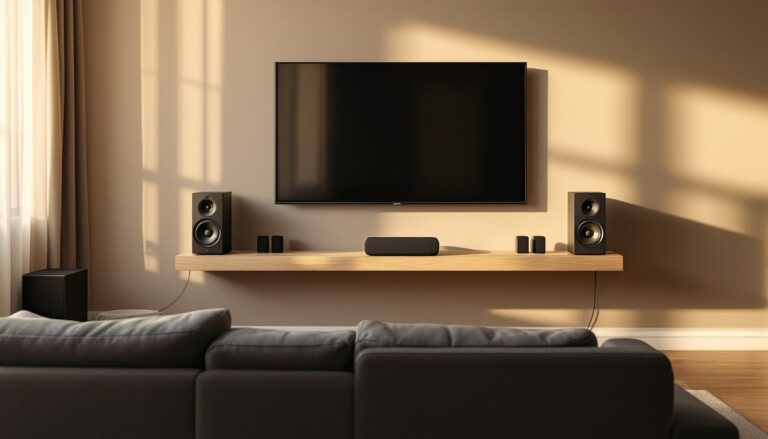
Entry-level setups start around $1,500 to $3,000 for a quality 65–75 inch TV, a competent 5.1 receiver, and either a soundbar or basic speaker package. This tier works for casual viewers who want better-than-TV-speaker sound without dedicated theater infrastructure.
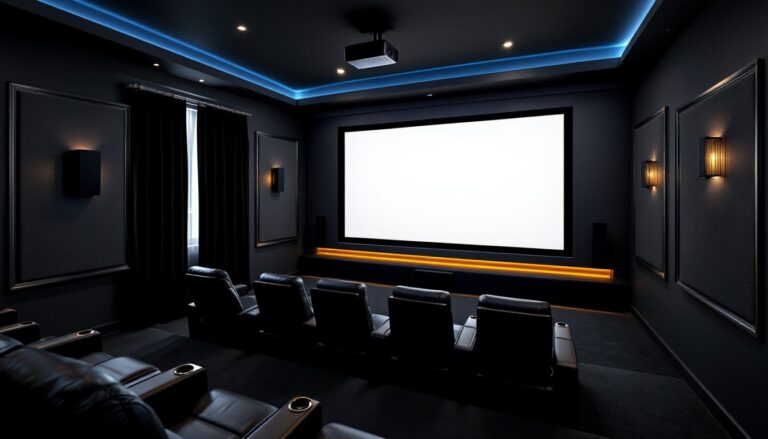
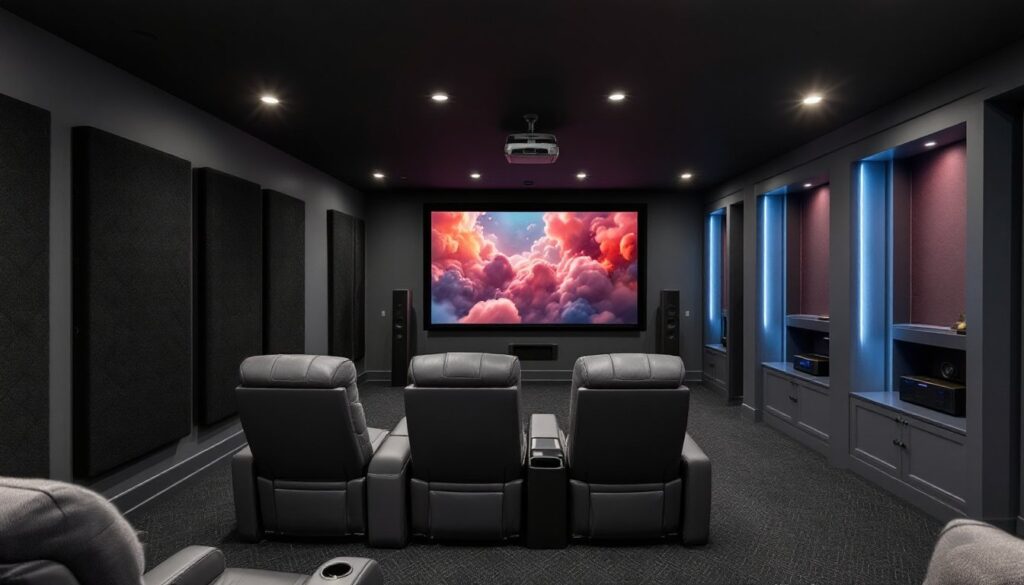
Mid-range builds, $5,000 to $12,000, include a 4K laser or high-lumen projector, fixed screen, dedicated AV receiver with Atmos support, and quality in-wall or bookshelf speakers. Add acoustic panels, seating, and basic lighting control. Many Charlotte homeowners land here when converting a bonus room or small basement.
High-end custom theaters run $25,000 to $75,000+ with professional design, construction, premium projectors, multi-way speakers, rack-mounted equipment, automation, specialized seating, and full acoustic treatment. These projects involve architects, electricians, and custom integration firms.
Don’t forget non-equipment costs. Materials for basic acoustic treatment (insulation, fabric panels, bass traps) add $500–$1,500. Electrical work for dedicated circuits costs $300–$800 if you hire an electrician. Theater seating ranges from $300 per seat for basic recliners to $2,000+ for motorized units with lumbar support and cooling.
Financing options in Charlotte include home equity lines of credit (HELOCs), which typically offer lower rates than personal loans since they’re secured by property value. Some custom integrators partner with financing companies offering 12 to 60-month payment plans, though interest rates vary considerably. Cash-back credit cards work for smaller purchases if paid off quickly. Comparing top-rated theater systems helps identify equipment that matches both performance needs and budget constraints.
Phased builds spread costs over time. Start with display and basic audio, add better speakers or a subwoofer later, then tackle acoustic treatments and seating as budget allows. Equipment doesn’t depreciate as fast as installation labor, so buying quality components piecemeal beats rushing into a poorly planned all-at-once installation.
Charlotte’s property values support home theater investments when done thoughtfully. Finished, functional entertainment spaces appeal to buyers, especially in family-oriented suburbs. Avoid over-improving for your neighborhood, a $50,000 theater in a $300,000 house won’t recoup costs at resale. Match investment level to home value and local market expectations.