Table of Contents
ToggleReplacing windows and doors isn’t just a cosmetic upgrade, it’s one of the most impactful renovations a homeowner can tackle. Whether you’re dealing with drafts that spike your heating bill, condensation between panes, or doors that stick every time the humidity shifts, these projects pay dividends in comfort, curb appeal, and resale value. With material options ranging from classic wood to low-maintenance vinyl and fiberglass, plus installation methods that vary from ambitious DIY to pro-only territory, understanding your choices upfront saves time, money, and regret. This guide walks through the signs that it’s time to replace, how to choose the right products, what installation really involves, and how to budget for both the project and long-term energy savings.
Key Takeaways
- Home window and door replacement can cut heating and cooling loss by up to 50% and save $125–$465 annually, with Energy Star–certified units paying for themselves over 20 years through energy savings alone.
- Visible signs like condensation between panes, audible drafts, difficulty operating units, and cracked glass indicate that repair won’t suffice and full replacement is necessary.
- Material choice dramatically affects cost and performance: vinyl windows ($300–$700) offer affordability, wood provides superior thermal performance, fiberglass balances durability with paintability, and each has distinct maintenance requirements.
- Insert (retrofit) window replacements are DIY-friendly on sound frames, but full-frame replacements and structural door modifications require professional contractors to prevent water infiltration and ensure proper flashing—the number-one cause of failure.
- Budget $300–$2,100 per window and $500–$3,000 per door installed, add 10–15% contingency for older homes, verify quotes include flashing and trim work, and check DSIRE for utility rebates to offset costs.
- Proper installation using low-expansion foam, continuous sealant beads, and flashing tape matters as much as the window itself; poor flashing and unsealed gaps are the primary causes of energy loss and water damage.
When to Replace Your Windows and Doors: Key Signs It’s Time for an Upgrade
Not every drafty window or sticky door needs immediate replacement, but certain red flags signal that repair won’t cut it anymore.
Visible condensation between glass panes means the seal has failed. Double- and triple-pane windows lose their insulating value once moisture breaches the gap, and there’s no fix short of replacing the entire glazing unit or window.
Difficulty operating the window or door goes beyond annoying. If sashes won’t stay up, locks don’t engage, or a door requires a shoulder check to close, the frame is likely warped, settled, or rotted. Wood frames in particular can deteriorate from prolonged water exposure, and metal frames may corrode in coastal or high-humidity areas.
Drafts you can feel with your hand around the perimeter, even when locked, indicate gaps that weatherstripping can’t solve. Run your palm along the edges on a windy day, if you feel air movement, the frame or installation has failed.
Cracked, chipped, or broken glass is an obvious candidate for replacement, but also check for failing glazing putty on older single-pane windows. If the putty is crumbling or missing, the glass is vulnerable and efficiency is shot.
Audible noise from outside suggests poor sound insulation. Modern double-pane windows with laminated glass or inert gas fills (argon or krypton) cut noise transmission significantly compared to single-pane units.
Peeling paint, water stains, or soft spots on interior trim or the sill point to water infiltration. Rot in the rough opening (the framed space in the wall) often means you’ll need carpentry work before the new unit goes in.
Energy bills creeping up without a clear cause can trace back to inefficient fenestration. Windows and doors account for 25–30% of residential heating and cooling loss, per the U.S. Department of Energy. If your home has original single-pane windows from the 1980s or earlier, replacement can cut that loss in half.
Choosing the Right Windows and Doors for Your Home
Matching your home’s architecture, climate, and maintenance tolerance means weighing materials, glazing options, and style.
Window Material Options: Vinyl, Wood, Fiberglass, and Aluminum
Vinyl windows dominate the replacement market for good reason: low cost (typically $300–$700 per window installed), zero rot, and minimal upkeep. They’re fusion-welded at the corners for a tight seal and available in white, beige, and a few color options. The downside? Vinyl can’t be painted, and in extreme heat, frames may warp or discolor over decades. Look for multi-chambered frames and reinforced sashes if you’re in a region with temperature swings.
Wood windows offer the best thermal performance and traditional aesthetics, critical for historic homes or high-end builds. Expect $800–$1,500 per window installed. They require periodic painting or staining, and any lapse in maintenance invites moisture damage. Clad wood, aluminum or vinyl exterior with wood interior, splits the difference, protecting the outer face while preserving the interior warmth.
Fiberglass windows outperform vinyl in strength and dimensional stability. They won’t expand or contract as much with temperature, so seals last longer. Fiberglass can also be painted, giving you color flexibility. Cost runs $600–$1,200 installed. The catch: fewer manufacturers means limited style options and longer lead times in some markets.
Aluminum windows are durable and slim-profile, favored in commercial and modern residential builds. They conduct heat readily, making them less energy-efficient unless fitted with thermal breaks (insulating material between inner and outer frame sections). Coastal homes benefit from aluminum’s corrosion resistance. Pricing is similar to vinyl, but expect higher energy costs without upgraded glazing.
Door Styles and Materials That Match Your Home’s Aesthetic
Steel entry doors deliver security and insulation at $500–$1,500 installed, depending on thickness (18-gauge or 16-gauge steel) and foam core type. They dent if struck hard but resist warping and don’t rot. Most come pre-hung, simplifying installation.
Fiberglass entry doors mimic wood grain convincingly and handle moisture better than wood or steel. They’re lighter than steel, easier to install, and can be stained or painted. Budget $800–$2,500 installed. They’re ideal for covered porches or areas with moderate sun exposure, prolonged UV can fade gel-coat finishes over time.
Wood doors bring unmatched character but demand the same maintenance as wood windows. Solid-core wood doors cost $1,000–$3,000 installed. For climates with heavy rain or direct sun, consider a fiberglass alternative unless you’re committed to annual refinishing.
Sliding patio doors in vinyl or aluminum work well for deck access and cost $1,200–$2,500 installed. Hinged French doors (wood or fiberglass) run $2,000–$4,000 and offer a wider opening but require clearance to swing.
Glazing matters as much as the frame. Low-E (low-emissivity) coatings reflect infrared light, keeping heat in during winter and out in summer. Argon gas fills between panes slow heat transfer. In northern climates, triple-pane with double Low-E coatings can drop U-factors (a measure of heat loss) to 0.20 or below. Southern climates benefit from solar heat gain coefficient (SHGC) ratings under 0.30 to block excess heat.
DIY vs. Professional Installation: What Homeowners Need to Know
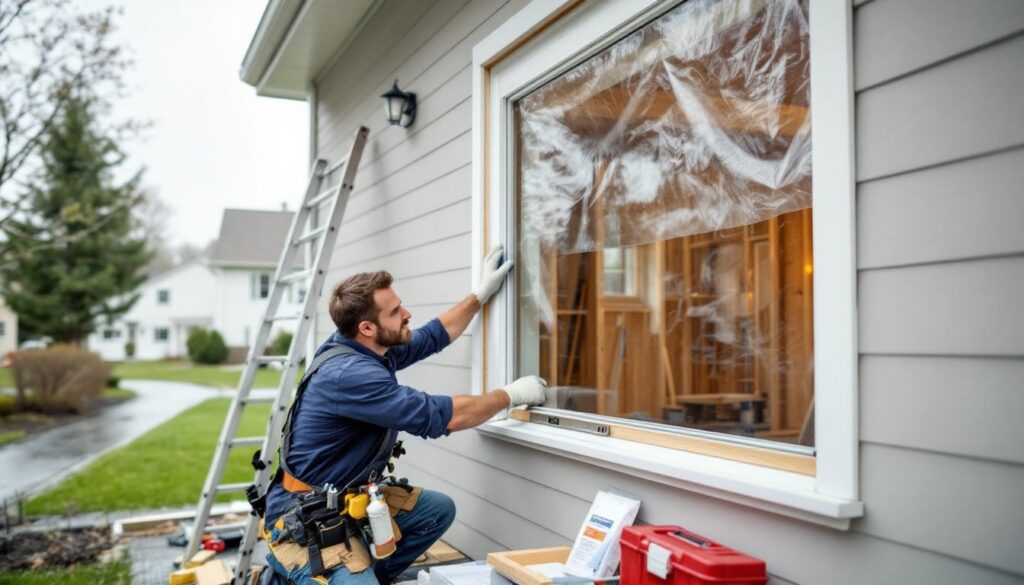
Window replacement breaks into two categories: insert (or retrofit) and full-frame. Insert windows slide into the existing frame after removing the sashes, preserving interior and exterior trim. This is the DIY-friendly route if the frame is square, plumb, and rot-free. You’ll need a level, shims, a drill, and either screws or nails to secure the unit. Expect a half-day per window once you’ve done one or two.
Full-frame replacement removes the window down to the rough opening. This is necessary when the frame is damaged, you’re changing window size, or the home has brick or stucco cladding that needs matching. It’s also when you’ll discover hidden rot, inadequate flashing, or missing insulation. Unless you’re comfortable with carpentry, flashing details, and exterior finishes, hire a pro. Poor flashing is the number-one cause of water intrusion callbacks.
Door installation is more forgiving for DIYers if you’re swapping a pre-hung unit into an existing opening of the same size. The new door comes mounted in its frame (jamb) with hinges attached. You’ll shim it level and plumb in three dimensions, secure it with long screws into the framing (not just the jamb), then insulate gaps with low-expansion foam. A 4-foot level, speed square, and patience are non-negotiable. Most installs take 3–5 hours.
Changing door size, moving the opening, or installing exterior doors in masonry requires cutting studs, adding headers (the horizontal framing member above the opening), and potentially pulling a permit. The International Residential Code (IRC) requires headers to carry the load above any opening in a load-bearing wall, undersizing a header invites structural problems. Hire a licensed contractor for any structural modification.
Safety note: Wear safety glasses when cutting, gloves when handling glass or sharp metal edges, and a dust mask if drilling into old paint (pre-1978 homes may have lead paint). Keep the work area clear, propped-up windows and doors are top-heavy and can fall.
Budgeting for Your Window and Door Replacement Project
National averages for window replacement costs typically range from $300 to $2,100 per window, including materials and labor. Doors run $500–$3,000 per unit installed, with patio doors and custom sizes pushing higher.
Material grade drives the biggest cost swing. Builder-grade vinyl windows start around $200 each: premium fiberglass or clad wood can top $1,000 per unit before labor. Labor adds $100–$300 per window for straightforward insert replacements, more for full-frame or second-story installs requiring scaffolding.
Regional labor rates vary widely. Metropolitan areas on the coasts may charge 30–50% more than the Midwest or South. Get three quotes from local contractors, and verify each includes flashing, insulation, interior and exterior trim, and debris removal.
Unexpected costs crop up during full-frame replacements: rotted sills, outdated or missing house wrap, undersized headers, or non-standard rough opening dimensions that require custom units. Budget a 10–15% contingency for older homes.
Permits are required in most jurisdictions for exterior door replacements and any window size changes. Fees range from $50 to $200 per permit. Skipping permits can complicate insurance claims and resale inspections.
Homeowners can find contractor reviews and detailed project cost breakdowns through services like Angi, which helps compare local pricing and vet pros. Planning tools on sites such as ImproveNet offer cost calculators that adjust for region and project scope.
Financing options include home equity lines of credit (HELOCs), cash-out refinances, or manufacturer financing (often 0% for 12–18 months). Some utility companies and state programs offer rebates for energy-efficient upgrades, check the Database of State Incentives for Renewables & Efficiency (DSIRE) before you buy.
Energy Efficiency and Long-Term Savings: Making Your Investment Count
The Department of Energy estimates that upgrading single-pane windows to Energy Star–certified double-pane units saves $125–$465 per year, depending on climate zone and heating fuel. Over a 20-year window lifespan, that’s $2,500–$9,300 in avoided energy costs.
U-factor and SHGC are the metrics that matter. U-factor measures heat loss, lower is better. Look for 0.30 or below in cold climates. SHGC measures solar heat gain, lower blocks more heat. Southern and western exposures benefit from SHGC under 0.30: northern climates may want SHGC around 0.40 to capture passive solar warmth in winter.
Energy Star certification varies by climate zone. A window rated for the Northern zone (Minnesota, Montana) needs a U-factor of 0.27 or less, while the Southern zone (Florida, Texas) prioritizes SHGC of 0.25 or less.
Air leakage is rated in cubic feet per minute per square foot of window area (CFM/ft²). Anything below 0.3 is tight: below 0.1 is excellent.
Proper installation is as critical as the window itself. Even a premium unit leaks if the gap between the frame and rough opening isn’t sealed. Use low-expansion foam (not standard gap-filling foam, which can bow the frame) and apply a continuous bead of sealant between the window flange and house wrap or sheathing. Flashing tape over the top flange and lapped shingles-style down the sides prevents bulk water from entering the wall cavity.
Door weatherstripping should compress slightly when closed but not require force. Adjustable thresholds on entry doors let you fine-tune the seal as the door settles. Check the seal annually and replace worn strips, it’s a $10 fix that preserves the door’s efficiency.
Storm windows and doors add a budget-friendly insulating layer to existing units. Exterior storm windows cost $150–$300 installed and can cut heat loss by 10–20%, useful if you’re not ready for full replacement but want immediate savings.