Table of Contents
ToggleSeattle’s relentless rain, damp winters, and surprising summer heat take a toll on home windows. If condensation fogs up the glass, drafts sneak through the frames, or energy bills keep climbing, it’s probably time for new windows. Replacing old, inefficient windows isn’t just about comfort, it’s about protecting the home’s structure from moisture damage and cutting heating costs that spike during those long, gray months. This guide walks Seattle homeowners through selecting the right windows for the Pacific Northwest climate, understanding local costs, navigating permits and rebates, and deciding whether to DIY or hire a pro.
Key Takeaways
- Home window replacement in Seattle addresses moisture damage, energy loss, and noise concerns caused by the region’s harsh climate of heavy rain, high humidity, and temperature swings.
- Energy-efficient windows with U-factors of 0.30 or below and ENERGY STAR® Most Efficient certification can reduce heating and cooling bills by 15–25% while improving resale value by 70–80% in the Seattle market.
- Vinyl and fiberglass windows are ideal for Seattle’s wet climate; vinyl is budget-friendly and maintenance-free, while fiberglass offers superior longevity and design flexibility.
- Home window replacement costs average $600–$1,200 per window for vinyl units, with full-house projects ranging $12,000–$25,000; professional installation ($150–$300 per window) is recommended for full-frame replacements to ensure proper weatherproofing.
- Seattle homeowners can access federal tax credits covering 30% of window costs (up to $600/year), plus local rebates from Seattle City Light and Puget Sound Energy, but must verify permit requirements and obtain pre-approval before purchasing.
- DIY window replacement is only feasible for single-story insert (retrofit) windows with proper sealing and flashing; full-frame replacements or second-story work require licensed professional installation to avoid water damage and warranty voidance.
Why Seattle Homeowners Should Consider Window Replacement
Seattle’s climate is uniquely tough on windows. The region averages 37 inches of rain annually, and humidity levels stay high through fall and winter. Old single-pane windows or failed dual-pane seals let moisture infiltrate, leading to rot in wood sills, mold growth, and peeling paint.
Energy loss is another major concern. Homes built before 1990 often have windows with minimal insulation value. During winter, heat escapes through the glass and frames: in summer, solar gain drives up cooling costs. Replacing those windows with modern double- or triple-pane units can reduce heating and cooling bills by 15–25%, depending on the home’s age and insulation.
Visibility and resale value matter, too. Foggy, scratched, or outdated windows make a home look tired. New windows improve curb appeal and are one of the few renovations that recoup a significant portion of their cost, typically 70–80% in the Seattle market, when the home sells.
Finally, noise reduction is a real benefit in urban and suburban Seattle neighborhoods. Dual-pane windows with laminated glass can cut street noise, making living spaces quieter and more comfortable.
Best Window Types for Seattle’s Climate and Weather
Vinyl windows dominate Seattle installations because they resist moisture, never need painting, and offer solid insulation at a reasonable price. They’re a practical choice for the wet climate, though color options are limited, usually white, tan, or gray.
Fiberglass windows cost more but outperform vinyl in strength and longevity. They expand and contract less with temperature swings, which means better long-term seal integrity. They can also be painted, giving more design flexibility.
Wood-clad windows, wood interiors with aluminum or vinyl exteriors, appeal to homeowners who want the look of wood inside without the exterior maintenance headaches. They’re common in Craftsman and bungalow-style Seattle homes but require periodic interior refinishing.
For operating styles, double-hung windows are the default for most Seattle homes: both sashes tilt in for cleaning, which is handy given the frequent rain and pollen. Casement windows (hinged on one side, crank-operated) seal tighter and perform better in windy, wet weather. They’re ideal for bathrooms, kitchens, or anywhere ventilation and water resistance matter.
Awning windows (hinged at the top) can stay open even during light rain, making them useful for basements or covered porches.
Energy-Efficient Windows: What Seattle Homeowners Need to Know
U-factor measures how well a window insulates: lower is better. For Seattle, target a U-factor of 0.30 or below. Double-pane windows with low-E (low-emissivity) coatings typically hit this mark. Triple-pane units can reach 0.20 but add significant cost and weight.
Solar Heat Gain Coefficient (SHGC) measures how much solar heat passes through. Seattle’s cooling season is mild, so a moderate SHGC (0.35–0.50) works well, it blocks excess summer heat without sacrificing passive winter warmth.
Look for windows with the ENERGY STAR® Most Efficient label for the Northern climate zone. Those units meet stricter efficiency thresholds and often qualify for utility rebates.
Argon or krypton gas fills between panes improve insulation. Argon is standard and affordable: krypton performs slightly better but costs more. Both are inert and safe, they won’t leak toxins if the seal fails, though the window will lose some efficiency.
Spacers, the material separating the panes, matter, too. Warm-edge spacers (foam or composite) reduce condensation and heat loss compared to older aluminum spacers.
How Much Does Window Replacement Cost in Seattle?
As of 2026, window replacement costs in Seattle average $600–$1,200 per window installed for standard double-hung vinyl units. Premium materials, fiberglass, wood-clad, or triple-pane, push costs to $1,200–$2,000 per window.
A full-house window replacement for a typical 2,000-square-foot Seattle home with 15–20 windows runs $12,000–$25,000, including labor and disposal. Factors affecting price include:
- Window size and style: Large picture windows, bays, or custom shapes cost more than standard sizes.
- Frame material: Vinyl is cheapest: fiberglass and wood-clad add 20–50%.
- Glass package: Triple-pane, laminated, or impact-resistant glass increases cost.
- Installation complexity: Rot repair, stucco or brick siding, or second-story work add labor hours.
- Seattle labor rates: Installer rates in King County run higher than rural Washington, expect $40–$75 per hour for skilled window crews.
Budget an extra 10–15% for trim replacement, paint touch-ups, or structural repairs discovered during removal. Rot around window openings is common in older Seattle homes and shouldn’t be ignored.
Material costs have stabilized since the 2023–2024 supply chain disruptions, but tariffs on imported aluminum and vinyl can still shift prices. Get quotes from at least three contractors and ask for itemized breakdowns.
DIY vs. Professional Window Installation: What’s Right for Your Seattle Home?
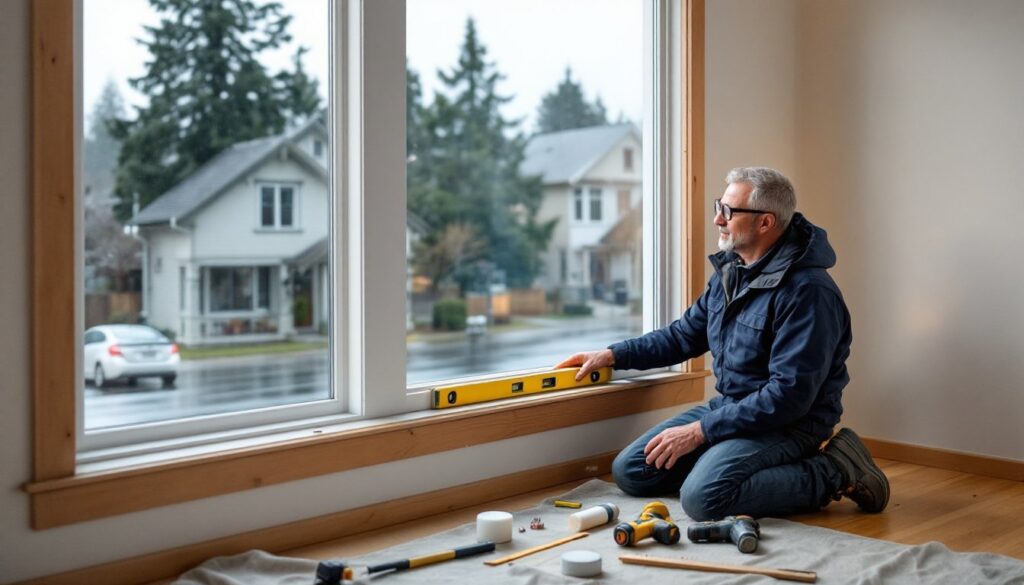
DIY window replacement is feasible for single-story homes with insert (retrofit) windows, new sashes that fit into the existing frame. This approach skips the exterior trim and siding work, making it faster and less invasive. A moderately skilled DIYer with basic carpentry tools can handle it.
Expect to spend 4–6 hours per window the first time, including prep, shimming, insulating, and sealing. Essential tools include a level, drill, reciprocating saw, caulk gun, and pry bar. Insulating foam and exterior-grade sealant are critical in Seattle’s wet climate, skip those, and water will find its way in.
Risks of DIY:
- Improper flashing or sealing leads to water infiltration and rot.
- Out-of-level installation causes sash binding or seal failure.
- Voided warranties: Many window manufacturers require professional installation to honor warranties.
- Injury risk: Second-story work or handling large windows alone is dangerous.
Professional installation costs $150–$300 per window in labor but includes proper flashing, weatherproofing, and warranty coverage. For full-frame replacements, removing the old frame and rebuilding the rough opening, pros are almost always the better call. This work involves structural considerations, building codes, and exterior siding repairs that most DIYers shouldn’t tackle.
If the home has stucco, brick, or complex trim details, hire a pro. Same goes for windows above the first floor or homes with rot or structural issues. A bad install costs far more to fix than the labor savings upfront.
Finding the Right Window Replacement Contractor in Seattle
Start with referrals from neighbors who’ve had recent window work done. Local nextdoor groups and community forums often surface reliable contractors. Online platforms like HomeAdvisor can match homeowners with vetted installers, though it’s still essential to do due diligence.
Check licensing and insurance: Washington requires contractors performing work over $1,000 to hold a valid contractor’s license. Verify the license at the Washington State Department of Labor & Industries website. Confirm the contractor carries general liability and workers’ compensation insurance, ask for certificates.
Get three written estimates. Each should include:
- Window brand, model, and specifications (U-factor, SHGC, glass type)
- Installation method (insert vs. full-frame)
- Warranty terms (manufacturer and installer)
- Timeline and payment schedule
Beware of lowball bids, they often signal subpar materials or unlicensed labor. Also avoid contractors who push hard for immediate deposits or discourage getting other quotes.
Ask for references and follow up. Visit completed jobs if possible, and ask past clients about punctuality, cleanup, and how the contractor handled unexpected issues.
Read the contract carefully before signing. It should specify start and completion dates, materials, disposal of old windows, and what happens if problems arise. Never pay in full upfront, typical schedules are 10–30% deposit, progress payments, and final payment upon completion and inspection.
Seattle Permits, Rebates, and Incentives for Window Replacement
Permits: In Seattle, window replacement generally does not require a building permit if the new window fits the existing rough opening and doesn’t alter the structure or egress requirements. But, permits are required if:
- Changing the window size or location
- Modifying framing or load-bearing elements
- Replacing basement or bedroom windows that serve as emergency egress
Check with the Seattle Department of Construction and Inspections (SDCI) before starting work. Permit fees run $150–$400 depending on scope.
Rebates and incentives:
- Seattle City Light offers rebates for ENERGY STAR® windows installed in electrically heated homes. Rebates vary but can reach $5–$8 per square foot of glazing. Check current programs at seattle.gov/city-light.
- Puget Sound Energy (PSE) offers incentives for gas-heated homes upgrading to high-efficiency windows. Amounts and eligibility change annually.
- Federal tax credits: The Inflation Reduction Act extends tax credits for qualifying energy-efficient home improvements, including windows, through 2032. Homeowners can claim 30% of material and installation costs, up to $600 per year for windows meeting ENERGY STAR criteria.
Cost estimation tools like those found on ImproveNet can help homeowners budget for the project and explore financing options.
Keep all receipts, product certifications, and contractor invoices, they’re required to claim rebates and tax credits. Some programs require pre-approval, so research before purchasing windows.